
Gardens & Villages
Intro
It might be true to say that nearly everyone who visits us is interested in visiting at least one village or garden. However, some of you might well like to focus entirely on them, and if so, please let us know – we have a specialist on our team who will be happy to design you tour!
I am not dealing with gardens and villages separately, so you won’t find a clear division on this page.
Also – we were not intending to list a ‘good to go’ garden or village tour as such on here either, merely because there are so many of them and we require more detailed knowledge about your interests to put a dedicated tour together - ‘create your own’ tours lend themselves better here.
That said – we would definitely suggest that you might like to link some of what you find on this page – for example, Ventnor Botanic Garden, Steephill Cove, Bonchurch, Shanklin and Godshill might make an obvious grouping as they are all close together – so would be a very good leisurely localised tour, maybe, but not necessarily, for anyone staying in this area – maybe at The Terrace Rooms & Wine or The Hambrough or The Royal in Ventnor or East Dene Estates in Bonchurch or Haven Hall in Shanklin?
So, here is a localised ‘good to go’ tour after all. Your day COULD look something like this:
Possible ‘Good to Go’ Garden & Village Tour
Morning – Ventnor Botanic Garden
Expert-led tour followed by morning coffee
Steephill Cove – maybe grab a crab pasty on the way through
On into centre of Ventnor for lunch at Smoking Lobster or restaurant of your choice, you might prefer more casual – Ventnor Exchange or Cantina could be perfect (or straight to Bonchuch and head for the Bonchurch Inn)
Afternoon – Bonchurch - look round this beautiful village (if you lunched in Ventnor, then take some time for a drink at Bonchurch Inn)
On to Shanklin – Visit the Chine and maybe a cup of tea (or such) at the cute Old Thatch tearoom
Then continue to Godshill – visit the Church and maybe also the Model Village
(Anyone interest in seeing the magnificent Pre-Raphaelite stained-glass windows in St. Lawrence Church just down the road from VBG might also like to include a quick stop there)
This will make a truly wonderful tour for anyone wishing to concentrate on one part of the Island and save the rest for another day.
Ventnor Botanic Garden – ‘Britain’s hottest’ (South-East)
A definite ‘must see’ is Ventnor Botanic Garden which stands on the site of what was once the ‘Royal National Hospital for Diseases of the Chest’ (1860s – 1960s). In the UK, this stunning subtropical paradise is rated second only to Kew Gardens. Not only is this an idyllic setting, but it offers a lot around the subject of health. Its gift shop alone is an absolute ‘must visit’. Amongst many other items, it sells a lot of its own produce, perfect for those of you who are intent on sourcing local Island products. For example, boadicea hops are exclusively grown here and along with eucalyptus globulus, they create a delicious Botanic lager. VBG has teamed up with local Goddards Brewery to create this and it’s available both on site here as well as at Goddards Brewery.
The history of the Royal National Hospital for Diseases of the Chest
Allow us to share with you the fascinating history of the old chest hospital (pictured below). This can be done in a number of ways, including a quirky ‘ghost walk’ (of a serious historical nature) with our ‘partner’ Marc Tuckey (see Spiritual & Artistic Wight).
The Plantation Room Café
Such a lovely place for a mid-morning or afternoon snack, to say nothing of a lunch! Fantastic location, overlooking the Garden. Sit inside (in what is part of one of the few remaining original structures of the Victorian Hospital), or outside on its colonial-style terrace. The Café ensures that they serve local produce wherever possible – preferably grown in the Garden itself!
Tours of Ventnor Botanic Garden (VBG)
This also forms part of our ‘good to go’ ‘Health, Beauty and Art tour’ (please see Victorian Wight).
We strongly recommend you taking either of our two tours which include VBG as the best way of seeing the garden within its local context. But if you are unable to do that – or wish us to construct your tour in a different manner for you – that is fine. We can still arrange for an on-site expert to guide you round the Garden itself (usually only possible for groups of 10 plus).
If your party numbers are less than that or if you prefer to take a more self-guided approach, we can walk you round the Garden ourselves, filling you in on the general background and allowing you to set your own pace.
NB: for groups over 10, we can also offer a deluxe VBG experience. (Please ask us about it.)
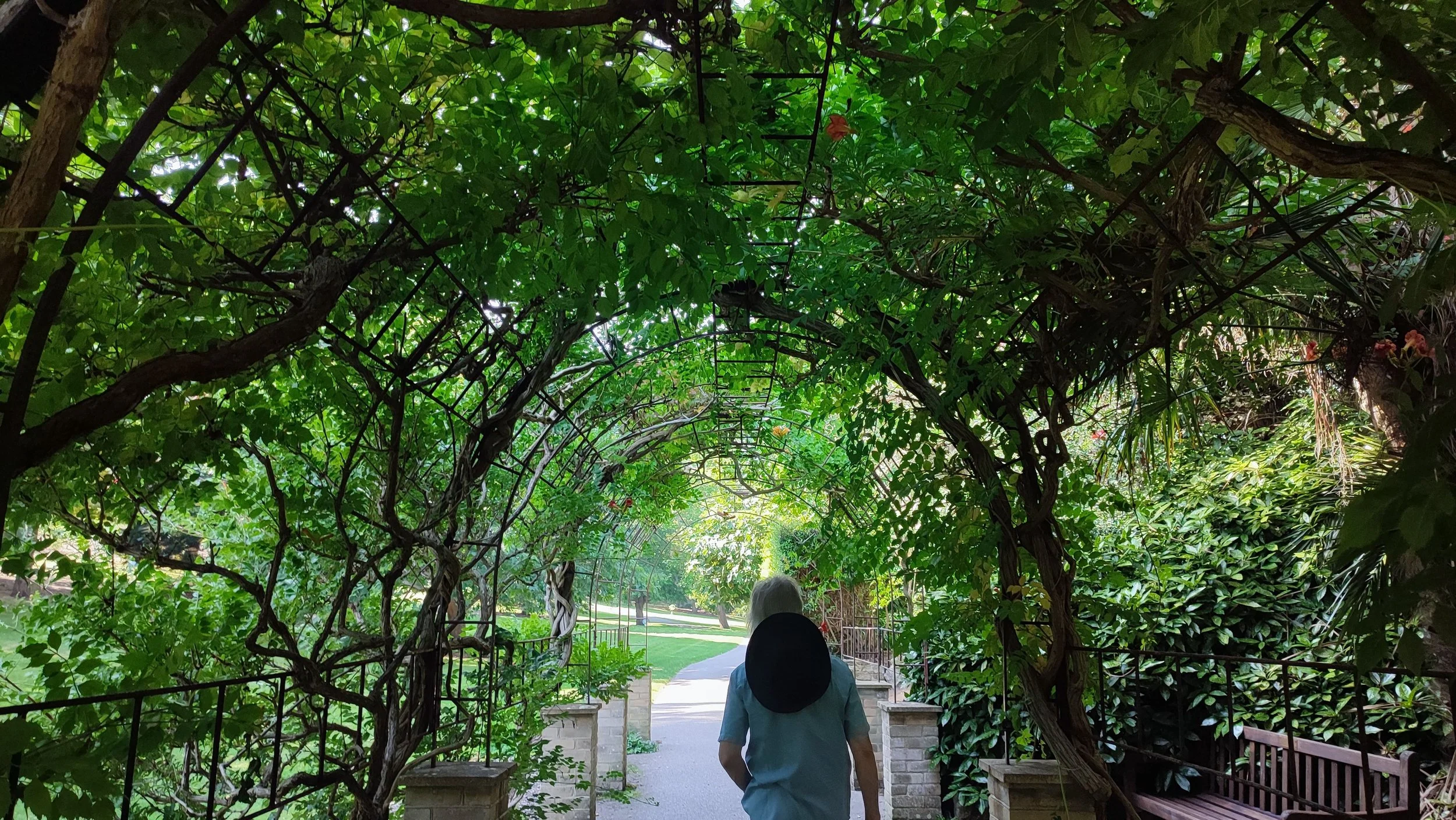
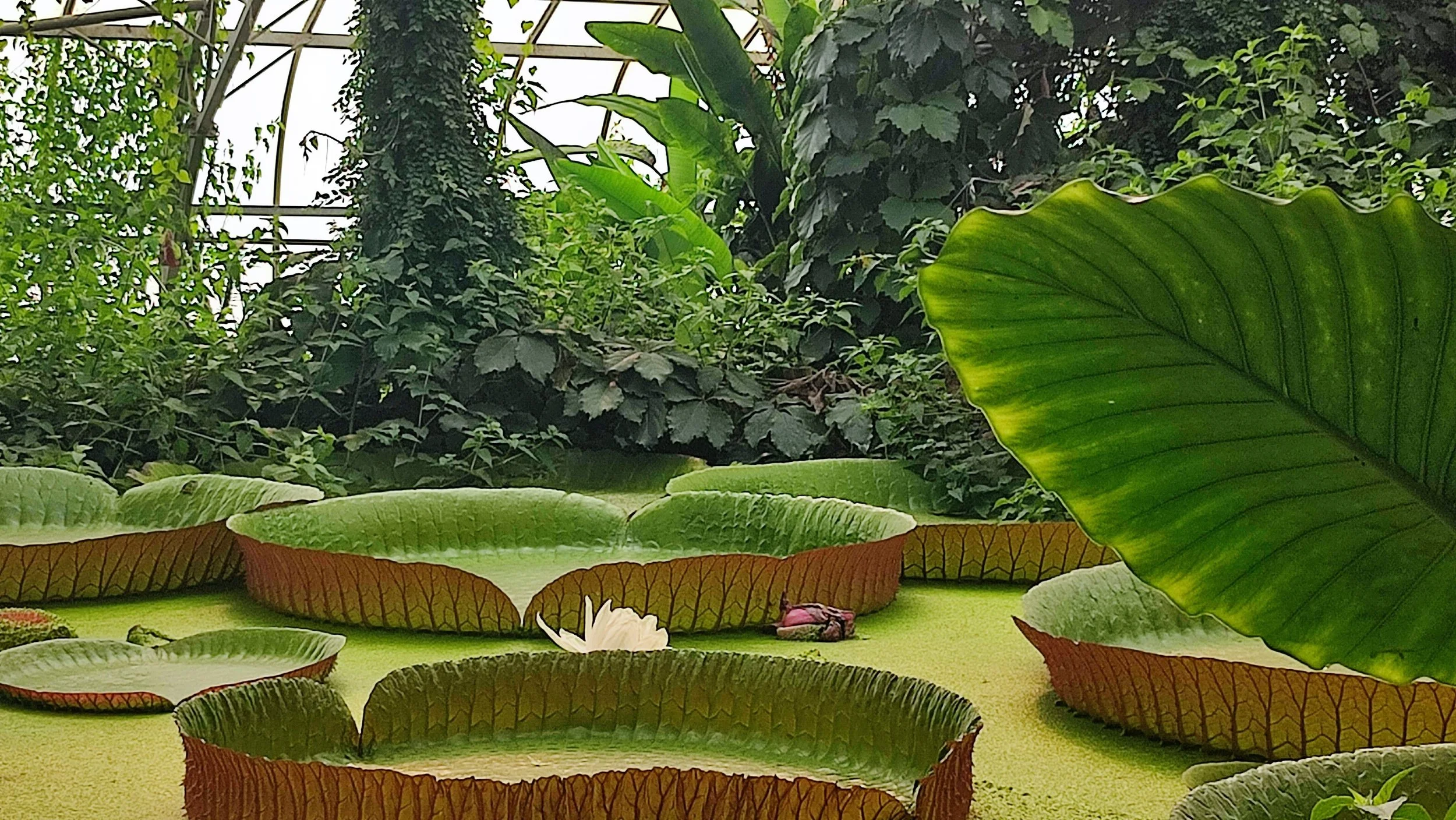
Steephill Cove (South-East)
And right next door – a fantastic meander down a pathway and steps (you will need to be relatively sure-footed for this one) hides Steephill Cove (the name says it all). But it’s worth it for the stunning views and Mandy Wheeler’s delicious crab pasties (she makes other kinds too!) See ‘Gardens & Villages’ to meet it again, as the Cove is technically a mini village.
Bonchurch (South-East)
Site of Special Scientific Interest
Bonchurch is a very old village indeed, its name first appears in the Domesday Book as Bonacerce. It is located on The Undercliff (Site of Special Scientific Interest), next to the Bonchurch Landslips or ‘The Landslip’. It actually pre-dates its Victorian neighbour Ventnor by some 700 years - in fact, it is one of the oldest settlements on the Island. This hidden-away small village is quite spellbinding and has changed little since the summer of 1849 when Charles Dickens and his family spent around six weeks here while he was in the process of writing ‘David Copperfield’, his most autobiographical novel.
Well-known as a literary colony – connection to Dickens
Long noted as a literary and artistic colony, it is especially known as being the place whose residents inspired not only some characters in ‘David Copperfield’, but also those who later featured in other Dickens’ novels.
(For those of you interested in including a Literary Bonchurch walk, please also see our page ‘Literary & Musical Wight’.)
Winterbourne - where Dickens stayed
Home too of Pre-Raphaelite poet Algernon Swinburne
It was also home to the 19th century poet Algernon Swinburne who is buried in the graveyard of St. Boniface Parish Church, consecrated in 1848 and located slightly higher up the road from ‘East Dene’, his childhood home. Thomas Carlyle and Thomas Babington Macauley also stayed/lived here … the list goes on. The poet Tennyson was also known to visit and stay here with friends.
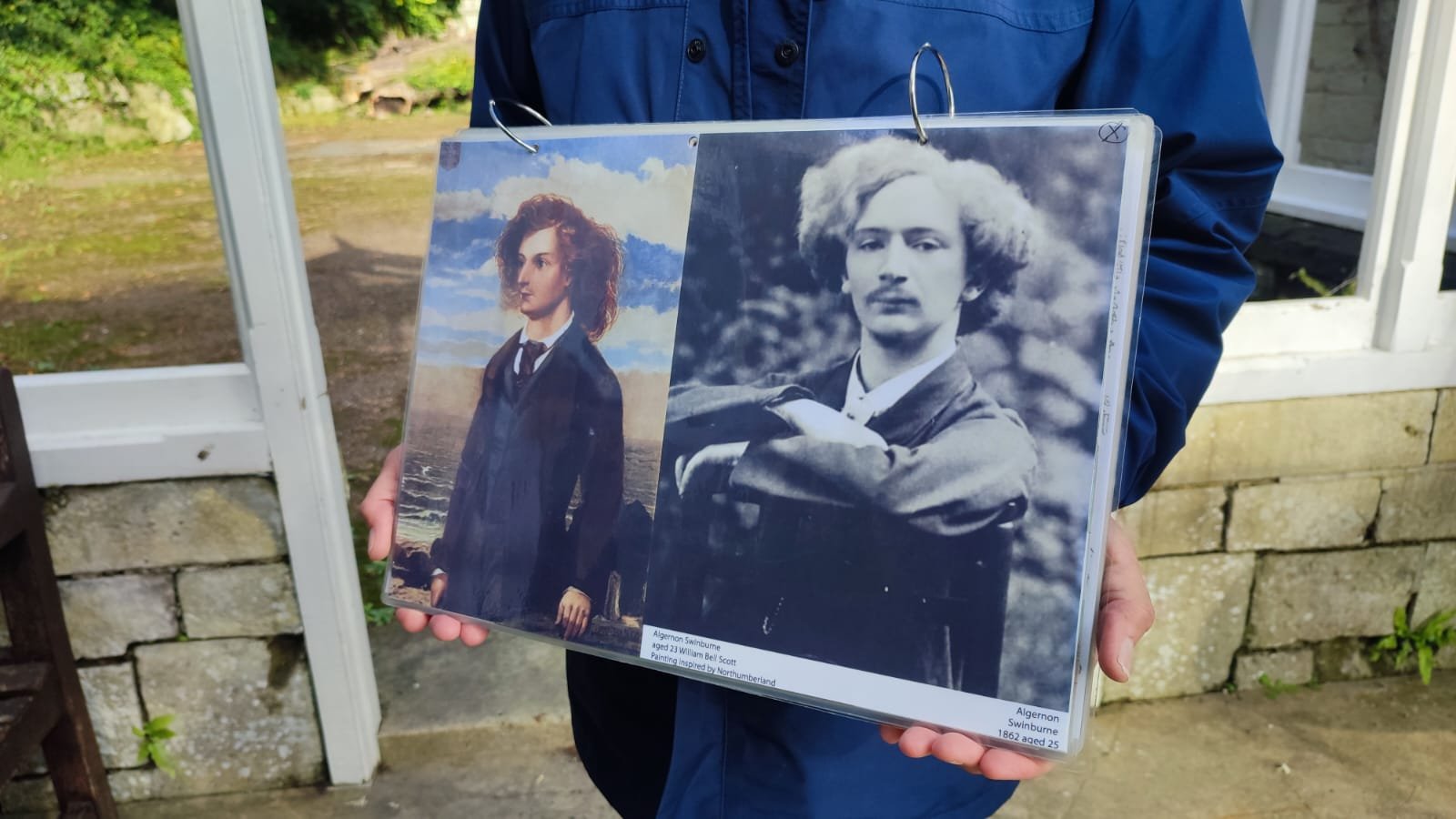
Bonchurch Pond
Veritably bursting with wildlife, The Pond is particularly well-known for its carp and terrapins. Stop and watch them for a while, as well as digesting the information on the lovely board.
Bonchurch Old Church
St. Boniface Church and the Saint himself
The quaint 11th century church is one of the smallest you will find (48.6 foot long by 12 foot wide) and totally deserves a visit. The muraled north wall could even be as early as the 7th century.
The Saint whose name it bears, St. Boniface, was born in 675 AD and was an Anglo-Saxon Benedictine monk, originally from Devon but later based at a Benedictine monastery at Nursling near Winchester in Hampshire. He set out from there on local missions, one being to the Isle of Wight, where there is a legend that he preached to local fishermen in Bonchurch.
St. Boniface’s later career
He later set sail for Germany on an evangelising crusade, eventually becoming Archbishop of Mainz and patron saint of Germania. He finally met his fate at the hand of the Frisians in AD 754.
He lent his name not only to the Church in Bonchurch, but also to the village itself and even to neighbouring St. Boniface Down (the highest point on the Island).
However, this present church was founded by monks from the Abbey of Lyra in Normandy who had been granted the tithes of Luccombe and Bonchurch by Willaim FitzOsbern, Lord of the Island. We can only deduce that this replaced a former Saxon church on this site.
It is only a very short (and steep!) walk between the ‘old’ (pictured above) and ‘new’ church (pictured below).
The Walk from Bonchurch to Ventnor
It is also not an overly strenuous walk from Bonchurch into Ventnor, that is if you are fit and up to walking. There are two routes – one along the seafront and one through the village and into the upper end of the town. Either way, it’s a lovely walk.
If you take the upper path, you will hear tales about several famous people who have spent time here - Winston Churchill and Gandhi among them.
Bonchurch Inn and its ‘life-changing lasagne’!
As we go round the village, you may fancy a well-deserved pit stop at the Bonchurch Inn at some point. This bustling hostelry is run by a lovely Italian family. It has a lively atmosphere and a cobbled courtyard where you can sit and bask in the sunshine, feeling far removed from anywhere else.
The home-cooked Italian food is totally authentic and of very high quality. It has an excellent reputation – not least for its ‘life-changing lasagne’!
Whether just having a drink or a meal, you will probably feel suitably refreshed and ready for whatever is next on the itinerary.
Bonchurch Pottery
Located directly on the waterfront, just a few steps down from the Old Church, those of you who love ceramics will be enthralled by their unique, sea-inspired motifs. Experience has shown that it’s hard to walk out of this little place empty-handed!
Shanklin Old Village and ‘Chocolate Box’ Cottages
The Old Thatch tearoom
Although now a lively town with good shops and restaurants, it is the ‘old village’ with its famous quaint thatched cottages that draws in the visitors. Once the homes of fishermen and smugglers, these are now mostly tearooms. The most attractive of these most people will tell you is ‘The Old Thatch’, the oldest building in the village. It is unmistakable both because of its pink exterior and its quirky themed interior and enchanting fairy garden!
Shanklin Chine
Its main claim to fame is Shanklin Chine. ’Chine’ is a Saxon word meaning a deep narrow ravine, formed by water cutting through soft sandstone which leads to the sea. Shanklin Chine is a magical world of sub-tropical vegetation and woodland with a stunning waterfall, discovered by intrepid 18th century explorers. In the Romantic Age (late 18th and early 19th century) mainlanders were seeking beautiful scenery, and the dramatic gorge (chine) fitted the bill perfectly.
Shanklin Chine evening illuminations
Famous visitors and admirers
Jane Austen wrote of it in 1817, and Keats too was inspired by it while staying in the Village in 1819. Great painters, among them Turner and Rowlandson painted it and Victorian literary figures including George Eliot, Macauley, Dickens and American poet Henry Longfellow, were great admirers. Charles Darwin inevitably also visited here when he was on the Island, as did Princess Victoria in 1864, admiring it greatly. Later, as Queen Victoria, she and Prince Albert purchased Osborne House and spent a good deal of time on the Island. After this, it became a fashionable watering place which was much frequented by European royalty also.
Smugglers, tourists and railways
Paths for tourists were cut by locals such as William Colenutt (1817) who opened it to the public and charged an entrance fee. It was also found to be highly useful for smuggling before the railway arrived in 1864.The railway massively boosted tourism and led to the development of the Esplanade and pier, thus becoming a classic seaside destination. The pier was unfortunately demolished in 1993 after having sustained substantial damage in the hurricane of 1987.
Beach and world-famous rock formations
Shanklin can boast a glorious sandy beach, and its cliff formations are of great geological significance. We know from Australian geologists who once toured with us that they are such classic textbook examples in their country that they visited the Island specifically to see them! (see Fossils & Geology).
PLUTO and WW2
A section of the WW2 PLUTO (Pipelines Under the Ocean), built to carry fuel to the troops fighting on French soil, is still visible within the Chine. There is also a fascinating exhibition which is dedicated to this incredible feat of engineering. (for more about PLUTO, please see War and Peace)
Pluto Pipes at Rookley
Your Shanklin tour will include:
We will ‘walk and talk’ you round both Village and Chine (including exhibition) and down to the beach at the bottom. We will inevitably make a quick pit stop at Fisherman’s Cottage, originally built in 1817 by the family who first cut a pathway through the Chine. And as a tip from us, before you leave Shanklin, we seriously recommend you take a peek inside ‘Cavanagh & Baker, The Island Made Emporium’ in the Village, which sells just about everything that the Island produces.
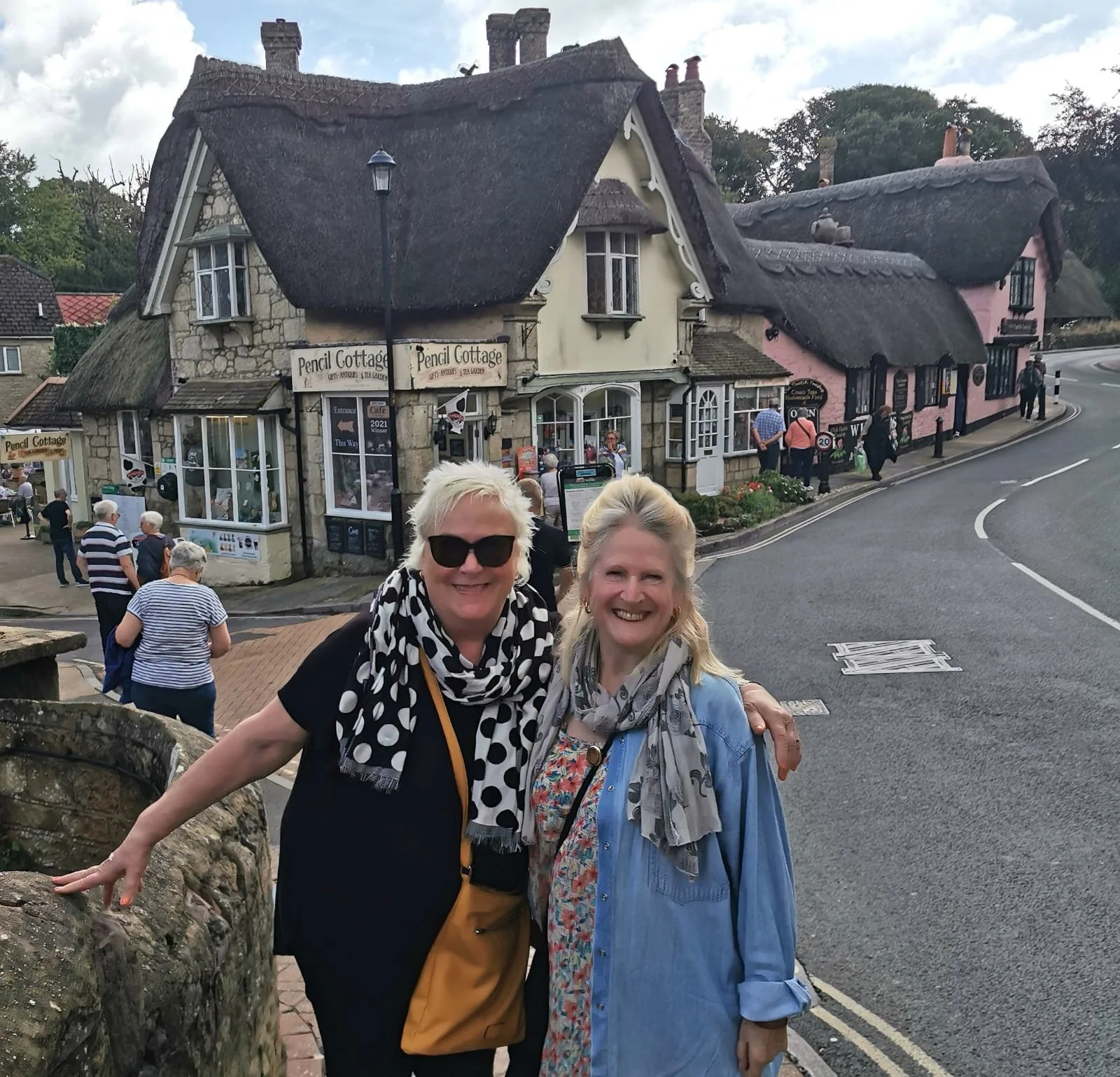
With lovely Dutch tour leader
Godshill and more ‘Chocolate Box’ Cottages
A lot of you already come here with Godshill on your wish list of places to see. The village is very small – but like Shanklin, it is full of beautiful thatched cottages, most of which are now tearooms. Like Shanklin, it too is situated in the middle of spectacular rolling countryside and tends to attract a lot of walkers – even outside of the most popular months for people to visit.
It is well-known for its Church, its Model Village, nice shops – including ‘The Smithy’ and ‘Island Gems’ (fossils), teashops and cider, cherries and apricots. Greengages and plums also grow well here – which is possible because of the microclimate that this side of the Island enjoys.
The climb to the Church
In a beautiful location at the top of the hill – it commands stunning countryside views for miles around. The relatively steep (but short!) climb to reach it takes you past simply breathtaking old cottages – most of them thatched. It is truly worth this little climb for this reason alone (for those who are able).
All Saints Church
The church is 14th century and has an unusual layout, with a double nave and chancel of roughly equal width, small transepts, porch and north-west tower, mostly in sandstone. There are also some fascinating tombs of notable people from the area.
The Lily Cross
The ‘lily cross’ crucifix painting in the side chapel is one of only two of its kind in Europe. It was painted during the early years of the Renaissance and was later whitewashed out to save it during the Reformation when Henry VIII ordered churches and their treasures to be destroyed. It was only uncovered by chance in 1842, and its ‘disguise’ carefully removed.
The church also has a stained-glass window by William Morris in its north wall, probably by William Morris himself – or at the very least by his ‘Firm’.
All Saints is probably the most photographed church on the Island – it is is definitely its largest medieval church.
The Model Village
The Model Village mainly features miniature recreations taken out both of the villages of both Godshill and Shanklin. The level of detail is amazing and there are a lot of quirky features to spot as you walk round.
The attraction has been in the hands of the same family for 30 years now and has links to the Royal Horticultural Society.
The Garlic Farm – Mersley village
One of my personal favourite places on the whole Island! I have been working together with ‘Garlic Farmer’, Colin Boswell, for at least 10 years, and also with other members of this wonderful family. They constantly move forward, increasingly upping their game in every way possible. They have organised many bespoke visits for our clients over the years, be it to eat, hear talks, do walks, guided tractor rides or attend events and take part in various things that the ‘Garlic family’ have so wonderfully arranged for them.
The Garlic Farm Shop
The fantastic array of products they have on offer in their shop (mainly their own but definitely not all – but certainly all Island-grown or made) and what they do with what they grow themselves is simply astonishing!
This place features extremely regularly on the ‘must visit’ list of our clients.
What can we organise for you here?
More than just eat and shop, that’s for sure! Below is an example of what you might wish to experience here – all organised and led by the Boswell family themselves:
Environmental, Archaeological, Ecological, Metal Detecting* and Historical walking tours
Sit-down meals with talks on any aspect of their work you would like to hear about
Chilli tasting – cooking and dish tasting
Entertainment – Music and gypsy jazz (one example)
To quote Colin, ‘this is only a taster!’
*The Garlic Farm is on soil very close to Brading Roman Villa (see ‘War and Peace’). A lot of Roman artefacts are found on the Farm – sometimes even older!
And they also have amazing accommodation. (Please see Eat, Drink & Stay)
As already mentioned, there would be many places to choose from – but we are obviously limiting ourselves. Some places that we know you will visit have magnificent gardens, most notably Osborne. Hence, we are not writing much about them on this page, merely giving them a quick mention. Let’s start with Osborne:
Osborne (North)
The grounds of Osborne are currently around 330 acres (in former time around 2,000). There is massive expanse of parkland area and also beautiful wooded pathways with many imported trees, some rarely seen in this country as they were gifted to the royal pair by visitors from overseas. There are also the more formal garden areas – the Italian Terrace and the Walled Garden. (please see Royalty, Racing & Rigging for the House itself)
Italian terrace
Walled garden
Carisbrooke Castle (Central)
Carisbrooke Castle has a beautiful, although not a large garden, known simply as ‘Princess Beatrice’s Garden’. The Princess (Victoria and Albert’s youngest child) had it laid out during the time she was resident in the Castle, and over the last few years it has been lovingly brought back to how it is thought it must have been like during her time here.
Below, you can see a bronze statue of General Jack Seely (1st Baron Mottistone) on his famous WW1 horse Warrior. Seely, a prominent Isle of Wight figure, as well as good friend of Winston Churchill, was also a good friend and confidante of Princess Beatrice for many years. (Please see War and Peace for the Castle itself)
Farringford Gardens (West)
The gardens of Queen Victoria’s great poet laureate, Alfred Lord Tennyon. Unlike Osborne, you can, if you wish, buy a ‘gardens only’ ticket. As with Princess Beatrice’s Garden in Carisbrooke Castle, they have been very highly researched and brought back to how they would have been in the poet’s day. A set of highly specialised gardeners, familiar with the period, tend the grounds. (Please see Victorian Wight and Literary & Musical Wight for the House itself)
Mottistone Gardens and village
Please see Spiritual & Artistic Wight, ‘Places of Spirit and Beauty’ section for more about the hugely popular Mottistone Gardens, Jack Seely, the Manor House AND The Longstone (separate entry).
Gatcombe Park and Gardens
(ideally for groups of 10 or over but can be fewer)
Finally, for something very special – exclusive and off the beaten track, what about a visit to this hidden treasure buried in the heart of the Island?
50 acres of historic landscape and ancient trees – why not take a ‘mini-retreat’ – even if just for one day! This beautiful house and its grounds appear in the Domesday Book.
It has links to the two most well-known families on the Island, namely the Worsleys and Seelys, as well as to King Charles I. Slightly more recently, it also has links to Rudyard Kipling, the King of Spain and Princess Margaret!
Take an expert-led guided tour of the estate grounds or even a Vineyard tour (3 on site).
Simply let us know your wishes and we will arrange the rest!
Gardens & Villages — Quietly Revealed
Almost everyone who visits the Island is drawn to its gardens and villages — some as gentle highlights, others as the focus of an entire day. Whether you’re imagining a single garden, a much-loved village, or a quietly flowing route linking several places close together, this part of the Island lends itself especially well to a slower rhythm.
Nothing here is fixed or ‘off the peg’. The places you’ve been reading about can be combined, lingered over, or explored in depth, shaped around what interests you most and how you’d like your day to unfold.