
Literary & Musical Wight
Intro
We have not tried here to cover a large number of writers or musicians – that is just not possible - there is a vast amount of creative talent here on the Island. Instead, we have limited ourselves to a handful of writers – past and present. And we have done the same with the music section, merely looking at the Isle of Wight Festivals.
The Island has vast musical talent covering all genres of literature and music (especially the latter is encouraged at an early age – we can be very proud of the amazing music college we have here). You will also find 4, possibly 5 ‘good to go’ tours on this page – ‘almost’!
Literary Wight
Medina Bookshop
As mentioned in Royalty, Racing & Rigging section, Cowes is home to the Medina Bookshop, run by singer songwriter Paul Armfield (himself a perfect example of the frequent connection between literature and music on the Island). Peter Harrigan, Director of Medina Publishing is also based here. Peter is one of our partners with whom we work very closely. He has given several talks to our clients, as well as hosting several events for us. We also join forces in entertaining and working with visiting authors, which sometimes leads to ongoing connections, as demonstrated on this page. Peter also combines both literary and musical aspects of the Island, as he was the press officer for the early Isle of Wight (Music) Festivals.
Isle of Wight Literary Festival
The Medina Bookshop also supply the books for the Isle of Wight Literary Festival, which has now earned itself a place as one of the country’s finest. Should you choose to visit us in October, you will be able to bear witness to this for yourselves! The host for this Festival is none other than the wonderful Northwood House, again described on the ‘Royalty, Racing & Rigging’ page. The setting just couldn’t be better – and we are also fortunate enough that the beautiful St. Mary’s Church (below), set within its grounds, is used as a venue for some of the talks.
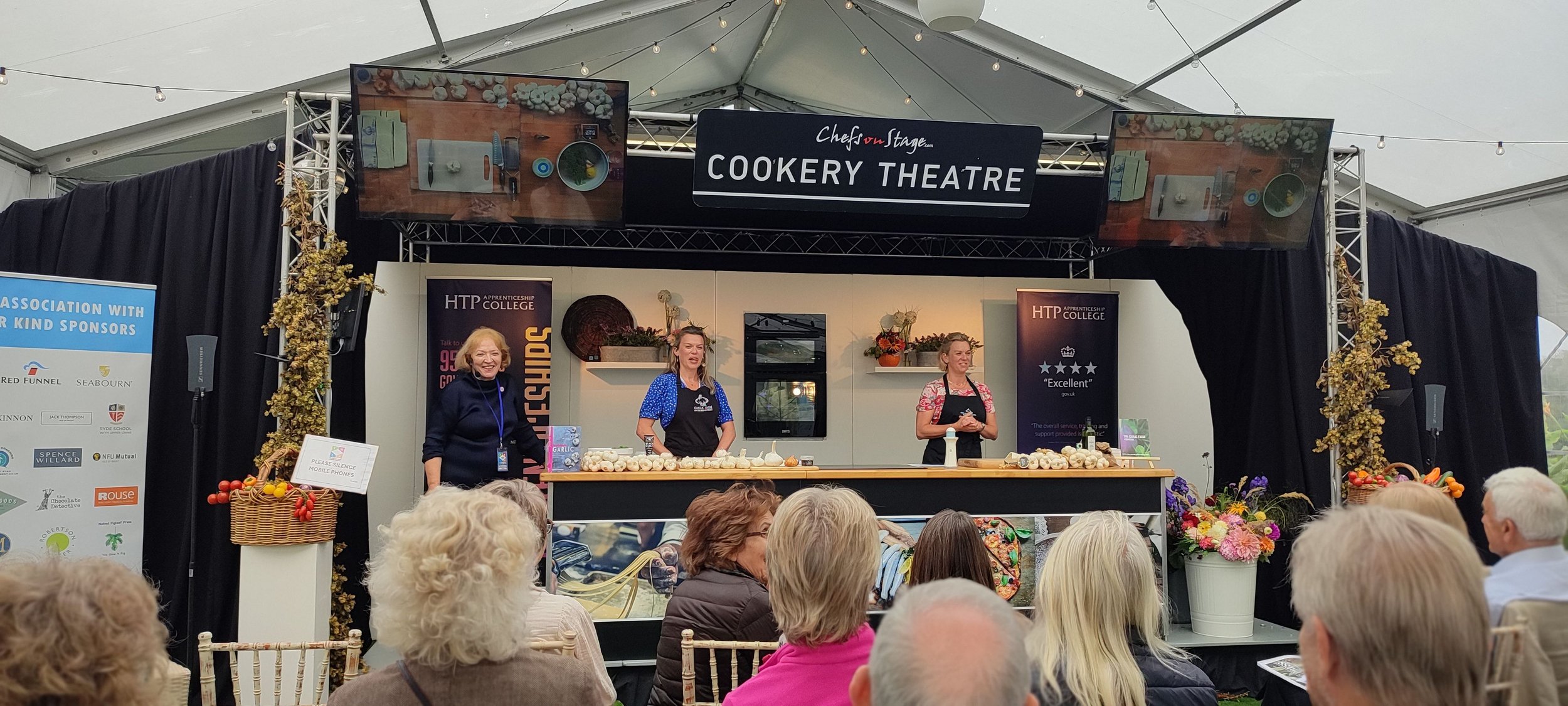
Garlic Farm at IOW Literary Festival 2025. Cookery demonstration followed by book signings
Isle of Wight literary heritage
Tennyson has received a good deal of attention from us, as might be expected (see both Victorian Wight and Fossils & Geology). But here he is again – as we can hardly write about Literary Wight without him!
Escaping from the prying eye of his celebrity status in Kensington, West London, he took up the suggestion of Isle of Wight friends to rent the house called Farringford in Freshwater Bay (which he later bought). This drew about a stream of other writers and artists and intellectuals from far and wide to visit him. But… of course, he can’t take credit for ALL the other Island writers. Neither was (or is) Freshwater the only thriving artistic colony on the Island.
Freshwater Bay, home to poet laureate Alfred Lord Tennyson for 40 years
Algernon Swinburne – resident of East Dene, Bonchurch
Swinburne was a highly colourful character who was a leading member of the Pre-Raphaelite group as a poet. Although not born on the Island (in the same way as Tennyson wasn’t), he did grow up here, in a house called ‘East Dene’ in Bonchurch. (Note the house’s name – you will meet it again!)
An Island Burial
Tennyson is buried in Westminster Abbey while his family are buried in Freshwater, Isle of Wight. Swinburne however, is buried on the Island (in Bonchurch), a mere stone’s throw from his childhood home. Neither of the poets died here.
Mutual respect but differences of opinion
Tennyson (who often visited Bonchurch) and Swinburne obviously knew each other well, as both lived and worked on the Isle of Wight for an overlapping period and inevitably moved in the same artistic circles. There was mutual respect, but they had as many differences as they did similarities, holding some vastly contrasting values and beliefs.
Candidate for Poet Laureate?
In fact, after Tennyson’s death in 1892, Swinburne was considered as a candidate for taking over the role of poet laureate, and his cause was championed by literary figures such as Oscar Wilde. He was, however, passed over as some of the subject matter he wrote about (especially in his younger years), was considered controversial at best and distasteful at worst. Gladstone, then Prime Minister, would have had the unenviable task of submitting his name to Queen Victoria, whose views on Swinburne were fairly clear!
Algernon Swinburne, as shown by Sue Lowday on her literary walk. Sue is also shown on her walk above.
Charles Dickens
Bonchurch and Dickens’ Island Connection
Charles Dickens famously spent a summer in Bonchurch in 1849, together with his family. Not only did he continue writing ‘David Copperfield’, his most autobiographical novel, while he was residing here at Winterbourne, but he also made the acquaintance of several people who he would use in not only that book, but also others. The blueprint of who would later become Miss Haversham in ‘Great Expectations’ was one of these. He adored the Island, particularly Bonchurch, and loved to roam the area, often climbing up St. Boniface Down just above the village. Noted for his walking habits, long and difficult hikes didn’t present him with a challenge, but rather offered a source inspiration and delight.
Photographs on the right courtesy of Sue Lowday.
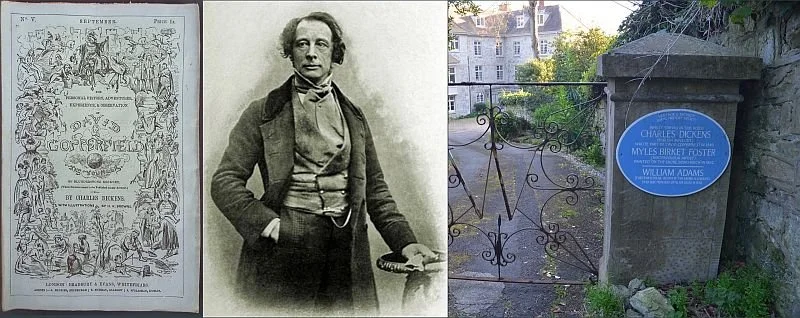
Presentation by Ian Dickens – great- great grandson of novelist Charles Dickens (Good to Go)
Ian Dickens, writer and artist and great-great grandson of his highly acclaimed ancestor, happens to live on the Isle of Wight. As another partner of ours, he will be happy to give you an extremely engaging illustrated talk on different variations on the theme of the life of his illustrious forebear. One of these in fact brings us right up to the present day.
This particular talk spans 5 generations of the Dickens family (including himself) and their connection to the sea. He ends with his personal experiences during his world circumnavigation in the clipper race of 2000/1. (He has written a book on this entitled ‘Sea Change’.) He recently delivered this talk to one of our VIP groups and held them captivated.
This presentation isn’t limited to being shown at any one venue – however, the photos shown here were at The Albion Hotel, Freshwater Bay (pictured top and right) - a stunning and fitting location to host it.
Anna Keen submitting a last-minute surprise for a (Dimbola) Dickens exhibition, drawn here tramping across the Island’s Downs. She is pictured here with Ian.
Guided Bonchurch Literary Walk (Good to Go)
Sue Lowday, Island historian and ‘Bonchurch as a Literary Colony’ expert, would love to lead you on a fascinating illustrated guided leisurely paced walk around the places in the village relating to the time not only of Dickens, but also, much more long-term, to that of Swinburne. She will also include other interesting and well-known characters who lived either directly in or close to the village. Sue has boundless knowledge and anecdotes and a scrapbook full of delicious snippets that she has collected over time to share with you.
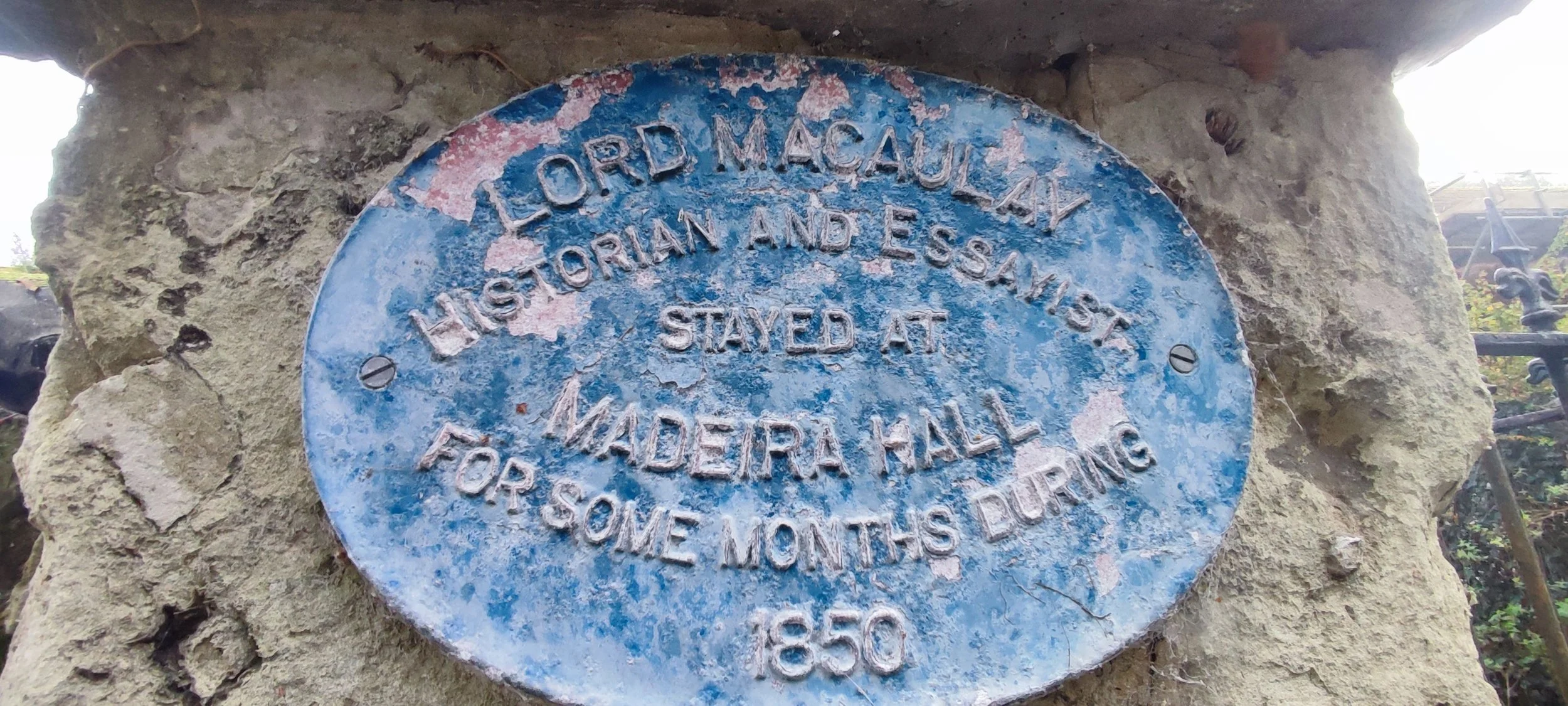
Where Macaulay lived
Three Modern-Day Writers
I thought it both appropriate here to also focus on modern writers with strong Isle of Wight connections, all of whom we have worked with closely. None of them originate from the Island, making their perception of it all the more interesting for my purpose.Two are former clients and one is our partner Stephan Roman, a London-based author whose highly successful book ‘Isle and Empires’ was published by Isle of Wight’s Medina Publishing. I am ordering them according to the time I have known them - which means starting with Stephan.
Stephan Roman
Author of ‘Isle and Empires’
Stephan and I have been working together for several years now. He has already conceived some truly enthralling and imaginative tours and talks, including something brand new which he and I are now offering collaboratively.
His book is not only fascinating in its subject matter, but incredibly well researched and informative. It is completely riveting and a real page-turner – quite difficult to put down in fact! As he himself writes, his own parents inspired him to write this book by bringing the British, Russian and Polish sides of his family together. To quote from the book’s back cover…
“This is a journey into a world of imperial glory and power, family rivalry, wars, intrigue and alliances. It is also a story of Russia’s revolutionaries, spies and terrorists, and the refugees fleeing Tsarist oppression who found safety on the Isle of Wight”.
Together, we have recently developed what we truly consider to be a magnificent tour, delving deeper into both the wonderful story of Royalty and Radicals on the Isle of Wight, as well as showcasing two of the most marvellous areas that the Island itself has to offer.
This is an exciting adventure for us – and for me personally, a total departure from what I normally offer – namely, this tour is NOT a private one, but open to anyone to sign up to. You will be part of a group of a minimum of ten and maximum of 14 like-minded people. Obviously, if your group wishes to book the entire tour exclusively, you are welcome to do so.
Either way, we strongly advise you to sign up as soon as possible as we fully expect there to be a high uptake on this. Both this tour and the one below are scheduled (hotels and speakers are already booked).
Royalty and Radicals tour
Brand new! Good to Go - 3-day scheduled tour
Wednesday September 23rd – Friday 25th, 2026
An exciting three-day tour, mainly based around Cowes in the north - with its strong connections to the Russian Imperial family, and Ventnor in the south-east, where the same could be said for their (Russian) Radical opponents. How simply fascinating that all this happened on Victorian Isle of Wight – do join us on this exquisitely-themed tour to learn more!
This premium tour is all-inclusive: the high-class accommodation, food and drink, transport (on the Island) and full programme is arranged and provided by us (excluding Osborne entrance and any food or drink there).
Please speak to me for full details, and please book early!
Romanov Collection, General Collection, Beinecke Rare Book and Manuscript Library, Yale University
Day 1
Royalty and Radicals Tour – Introductory talks and Imperial-themed dinner
14.00 - 16.00 – arrival at Albert Cottage, East Cowes.
We suggest that you take the Red Funnel ferry from Southampton to East Cowes. If you are not bringing your own car to the Island, taxis can be pre-booked to meet you on your arrival at East Cowes (these will be at your own expense). Your accommodation will be at the prestigious Albert Cottage, East Cowes (left). This was the home of Princess Beatrice, the youngest daughter of Queen Victoria and Prince Albert, and is a splendid Victorian era building with extensive gardens (originally belonging to Osborne itself). Car parking is available on site should you require it.
17.00 - 17.45 - tea and cake served in the Victoria Room. Welcome by Annie Horne (owner of Albert Cottage), Stephan Roman (Author of ‘Isle and Empires - Romanov Russia, Britain and the Isle of Wight’) and Jane Richter (Isle of Wight Guided Tours).
18.00 - 19.00 - illustrated talk by Stephan Roman on Anglo-Russian relations during the period of the Tsars, with a special focus on the Isle of Wight.
19.30 – 21.30 dinner at Albert Cottage. The menu will draw inspiration from that offered to the Tsar of Russia, Nicholas II, and Empress Alexandra Feodorovna by King Edward VII and Queen Alexandra during the Russian Imperial visit to Cowes in August 1909.
Day 2
In the footsteps of Russia’s Radicals
Breakfast
10.00 Depart for Ventnor. Drive along the east coast of the Isle of Wight passing through Sandown and Shanklin. Sandown was the favourite seaside resort of the German Imperial family and famous Germans such as the composer Richard Strauss also holidayed there. Shanklin is famous for its historic village centre and ‘Chine’ valley with waterfalls and sub-tropical vegetation. It was the first place on the Island ever to become a tourist destination and was visited by the great and the good – including Victoria herself, even before she became Queen.
11.00 - 1130 Ventnor - coffee at ‘The Terrace Rooms & Wine’ (shown right - formerly known as St Augustine Villa), where Alexander Herzen, a leading opponent of the Romanovs, used to stay in the 1850’s.
1130 - 11.45 a talk by Lesley Telford from the ‘Ventnor Heritage Centre’ about Ventnor and its general history.
11.45 - 12.30 a talk by Stephan Roman about the Ventnor Radicals who actively opposed Russia’s Imperial rulers in the middle years of the nineteenth century. The political, literary and social thinking that emerged from Ventnor helped lay the foundations for the Russian Revolution of 1917.
1230 - 14.00 lunch at The Terrace, Ventnor
14.15 - 15.00 guided walk along the Esplanade in Ventnor, passing where many radicals stayed including Count A.K Tolstoy and the writer, Ivan Turgenev.
15.15 – 15.45 visit Ventnor Heritage Centre
15.45 – 16.45 return to Albert Cottage, driving along the Military Road (scenic road that runs along the south coast of the Island). You will pass Blackgang Chine, associated with Ivan Turgenev and his most famous novel ‘Fathers and Sons’, and St Catherine’s Down, with its unique monument to Tsar Alexander I.
16.45 – 18.00 free time at Albert Cottage. A light tea will be available in the Victoria Room.
18.00 depart for Cowes. Cross by the Floating Bridge to Cowes, following in the footsteps of the Russian Grand Duchesses Olga and Tatiana, the eldest daughters of the last Tsar, Nicholas II.
18.30 – 19.30 visit Medina Bookshop, Cowes. Welcome by Peter Harrigan, Director of Medina Publishing.
1945 – 22.00 dinner at the Smoking Lobster, one of the top seafood restaurants on the Isle of Wight (non-seafood dishes also optional).
Day 3
In the Footsteps of Russia’s Imperial Family
Breakfast
09.30 -10.00 briefing in the Victoria Room by Jane on Osborne House and its history.
10.00 - 10.30 visit to Romanov Memorial, East Cowes.
10.30 – 11.30 visit to Queen Victoria’s Royal Church at Whippingham.
11.30 -15.00 visit to Osborne House (English Heritage). This was the home of Queen Victoria and Prince Albert and was well known to the Romanov family.
Please either pre-book tickets online or buy at the venue upon arrival. (Price for these not included in the package.)
You will have a chance to explore the Queen’s state and private apartments and then walk through the grounds to the Queen’s private beach and visit the Swiss Cottage, where the royal children played (including the future Empress of Russia, Tsarina Alexandra).
Jane will give a talk before you enter the House and both she and Stephan will accompany the group around Osborne and its grounds. Coffee and lunch can be enjoyed at Osborne where there are several cafes offering a choice of sandwiches, cakes and hot dishes.
Food and drink at Osborne house are at your own expense.
15.00 return to Albert Cottage.
15.00 - 16.00 light afternoon tea available in the Victoria Room before departing for the Red Funnel Ferry in East Cowes.
(Should you wish to stay on for the weekend, this is of course entirely your choice - indeed, the timing offers the perfect opportunity for you to do so!
And if you require any further assistance of any kind - including guiding - over the weekend, please let me know, we will be more than happy to oblige.)
Copies of a brand-new edition of Stephan’s book will soon be on sale should you wish to buy one.
Shown below, a lovely Dutch client snapped up a copy of the original hardback edition in another of our wonderful Island bookshops, this time ‘Babushka Books’ of Shanklin. She was in the middle of a ‘create your own’ Literature and Gastronomy tour when she was delighted to find and snap up a copy.
Good to Go – Super Deluxe Literary 3-day scheduled tour
Wednesday September 2nd – Friday September 4th
The tour outlined below is brand new and we hope you will find it as exciting as we do! It’s a collaborative venture featuring several local ‘movers and shakers’ with whom we work on a regular basis. Unlike our normal tours, it isn’t personalised, but one which anyone can sign up to (minimum 10 - maximum 14 people). No need to worry – you will all be like-minded individuals who may start out as strangers but won’t end up that way! Obviously, if you want to book all the spaces for your own personal group, you are entirely at liberty to do so – this is on a ‘first come first served’ basis and once it is full, it is full – so booking at the earliest opportunity is to be strongly advised.
The tour is all-inclusive – hotel, transport once on the Island (except taxis upon arrival to take you to hotel), itinerary, food and drink (served with meals and anywhere else they are mentioned.
Please speak to us direct regarding prices and booking.
Nearest arrival point on the Island would be Yarmouth (crossing from Lymington) however, we suggest you choose the route that suits you best. Please see ‘Getting Here’ page.
Day 1 – Wednesday September 2nd
Arrival in The Albion Hotel, Freshwater Bay around 4 p.m. (or later if necessary) with welcome cocktail and nibbles. (If you require a taxi and want our help – please let us know. N.B. taxis to hotel aren’t part of the package). ‘Settling in’ time – you won’t want to miss taking advantage of your wonderful rooms and perfect location whenever possible! (For more information about the hotel – please see both ‘Eat, Drink & Stay’ and ‘Victorian Wight’ pages.)
6.00 – 6.45 p.m. Introduction from Jane on the Isle of Wight and literature, including a 20-minute excerpt from her documentary ‘Cameron, Coffee and Calcutta: A Traveller’s Tales’, which will give you a taste of the literary and artistic importance of Freshwater Bay in particular. Tonight’s welcome briefing is specifically aimed at tomorrow’s programme but will of course include a general overview.
Dinner – 7.45 p.m. at the hotel’s wonderful restaurant ‘The Rock’. Why the name? Just look out of the window! (See left) (Possibility of a shortened repeat of my overall introduction to the tour for latecomers, either immediately before dinner or later in the evening, if desired).
Day 2 – Thursday September 3rd
Breakfast
10.15 - 11.30 a.m. Morning tour at Farringford (home of Alfred Lord Tennyson, Queen Victoria’s poet laureate).
11.45 Dimbola Museum and Galleries for tea/coffee at their award-winning teashop, followed by a short tour of the galleries themselves.
1 – 2 p.m. Reconvene in teashop between for a light lunch.
Hereafter follows a choice:
Walk up to Tennyson Monument for those who wish (hilly), a stroll round local ‘Freshwater Circle’ literary haunts (flat) or for complete relaxation, return to hotel to maximise use of your wonderful terrace!
4.15 p.m. reconvene at hotel (latest) for tea and biscuits ahead of a 4.30 – 5.30 p.m. talk by Ian Dickens, great-great grandson of Charles Dickens, who will be sharing ‘insider information’ about his famous forebear, as well as letting us in on the secret of the extent to which his illustrious ancestor has impacted his own life.
5.30 – 6.20 p.m. - time to take a breather and relax.
6.20 p.m. leave hotel to drive to the Medina Bookshop, Cowes.
7 p.m. pre-dinner drinks and nibbles and fascinating short talk by Peter Harrigan, Director of Medina Publishing. Peter will be able to talk you through some themes and examples of current Isle of Wight literature. Here we will be joined by Stephan Roman (author of ‘Isle and Empires’, also published by Medina Publishing). Peter will make the initial introduction to Stephan.
8 p.m. dinner at the Smoking Lobster, Cowes (one of the Island’s top seafood restaurants - also non-seafood options available). Ian Dickens, Peter Harrigan and Stephan and I will all be with you – enabling you to carry on good conversations and ask any questions that you didn’t get to ask earlier!
Drive back to hotel.
Day 3 Friday September 4th
Breakfast
Check out – bring luggage with you
Leave hotel at 9.15 for Bonchurch
10.00 – 12.30 Literary Walk with Sue Lowday (Dickens, Swinburne, Macauley etc.) Let Sue, a Bonchurch resident and local literary expert, beguile you with her tales!
12.30 depart Bonchurch for neighbouring Ventnor.
12.45 – 2.00 p.m. luxurious light lunch in a stylish setting (on the terrace itself, of course, weather permitting) at ‘The Terrace Rooms with Wine’, Ventnor (formerly known as St. Augustine Villa - where Alexander Herzen, a leading opponent of the Romanovs, used to stay in the 1850’s).
2.00 – 2.45 p.m. a talk by Stephan Roman about the Ventnor Radicals who actively opposed Russia’s Imperial rulers in the middle years of the nineteenth century. The political, literary and social thinking that emerged from Ventnor helped lay the foundations for the Russian Revolution of 1917.
2.45 – 3.15 p.m. guided walk along the Esplanade in Ventnor, passing where many radicals stayed including Count A.K Tolstoy and the writer, Ivan Turgenev.
3.15 p.m. minibus pick-up from The Spyglass Inn up to the Ventnor Heritage Centre.
3.20 – 4 p.m. visit to Ventnor Heritage Centre.
4.00 p.m. from here, minibus to Cowes to catch the next Red Jet crossing back to Southampton.
Some of you may wish to spend another night or two, and who could honestly blame you! We can help you arrange this if you would like and even guide you round some more Island highlights – the jewel that is Osborne House etc. If interested, please mention this when you get in touch with us.
Susanna Hoe
Susanna (who you already met briefly on the’ Royalty, Racing & Rigging’ page), is the author of a series of books about women and islands – a fascinating and highly original concept. Her book ‘The Isle of Wight: Women, History, Books and Places’ is the last of the series.
She contacted me to ask if I would show her round – not wanting to visit the more obvious spots, but to locate different places she already knew that she needed to visit for her research. She also required a travel companion who could throw more light on some at least of the people and places she was going to write about.
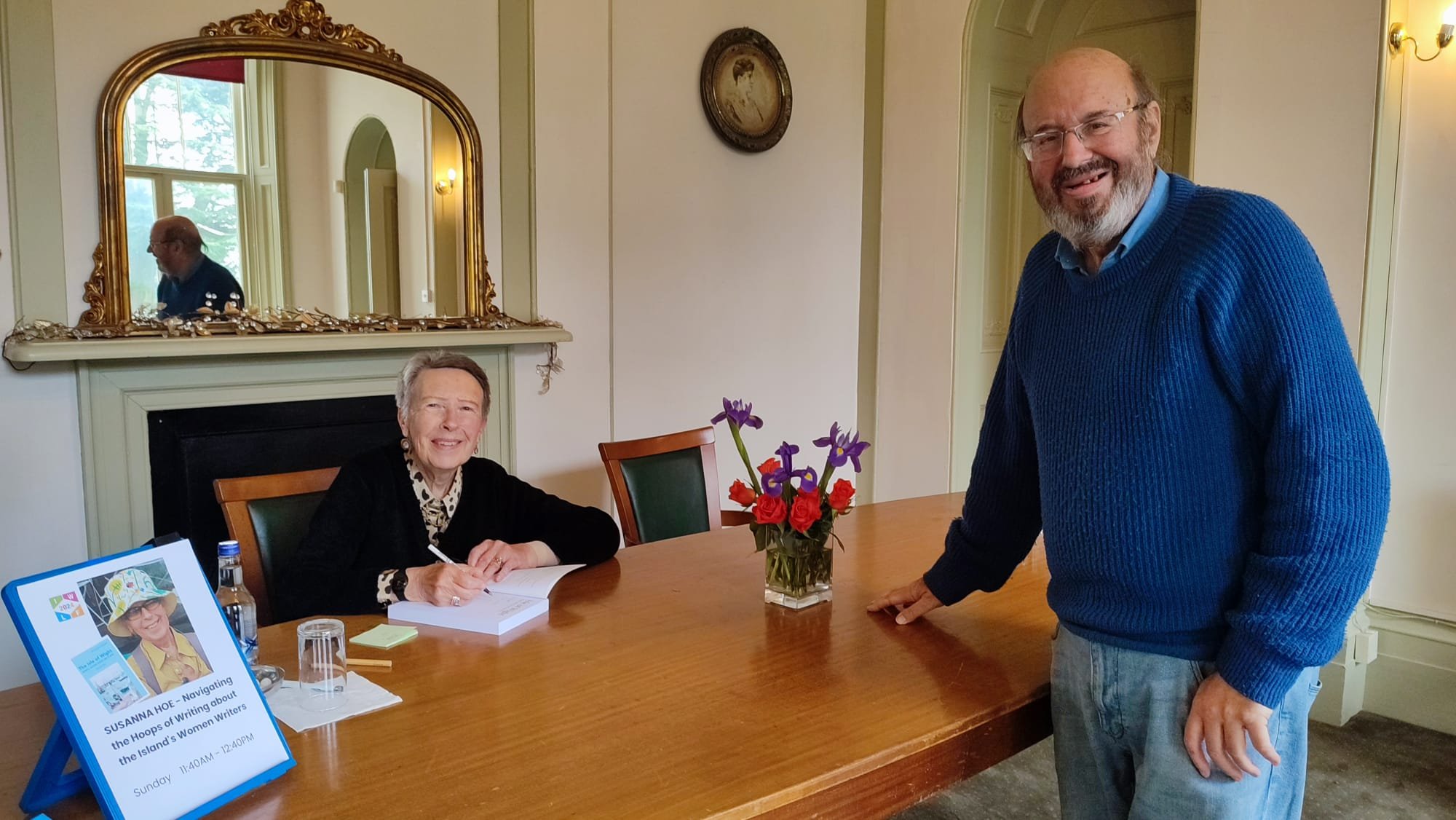
Susanna signing book for Dr. Brian Hinton at the Isle of Wight Literary Festival
I was also able to introduce her to several of the partners who you will meet on these pages, not least book publisher Peter Harrigan – who went on to do a limited Isle of Wight run of the book for her. This in turn led to her being invited to speak at the Isle of Wight Literary Festival.
When her book was published, I couldn’t have been more surprised or moved to see that she had dedicated it to me – and what better testimonial could I ever hope to receive than the one actually printed inside the book:
“Jane Richter, to whom the book is dedicated, almost deserves the status of co-author, so much has she been involved in the creation of it. From when I first contacted her ‘as a last resort’, she rode round with me to wherever I needed to go during three research trips. During those drives and at the places we visited, she gave me the benefit of her knowledge. Later, with that knowledge of the Island’s history, as well as its present places, she read the whole book, correcting the obvious errors’.”
Amy Harmon
You have also already met Amy on my ‘Spiritual and Artistic Wight’ page and briefly again on ‘Royalty, Racing & Rigging’.
I did much the same for Amy as I did for Susanna – the same but also different – one writing fiction, one non-fiction – one trying to track down places from the past that were possibly no longer standing and the other searching for inspiration and a feel for a certain place. Both were desperate to talk to people – and as ever – making introductions to other Island people I felt might be helpful was as much part of my remit as anything else.
Susanna signing book for Amy
Susanna and Amy – a near miss!
A while ago – they physically missed each other on the Island by a mere matter of days. It was just before Amy’s second visit that Susanna made one of her rather more frequent ones (she living in the UK rather than the US makes visiting us far easier!)
However, Susanna signed a copy of her book as a gift for Amy to receive upon arrival – along with a hand-written message wishing her every success.
Almost Good to go – ‘Magical Musical & Literary Mystery Tour’
Take a fun gallop round the Island with us – skipping from West to South to Central and then East – dropping into fun places with a strong musical and/or literary connection (on the music side - mainly Isle of Wight Festival related). Our stops include quirky museums, fun book- or record shops, eateries-cum-event venues etc. etc.
The tour is ‘almost’ good to go because it isn’t as mapped out as our other ‘good to go’ tours tend to be. But it is almost there – in that it is strongly themed. Of course, your strongest emphasis can be either musical OR literary – or an even divide– or of course – you can choose a tour that is exclusively one or the other!
Hence, we are not even listing a proposed itinerary here yet, because if we did, how could it be a mystery? But we will share our (secret) ideas with you once you enquire about the tour!
For now – we have, out of fairness, given you some ‘clues’, in that you might be able to guess some potential destinations from texts or photos on this page – but you won’t find them all!
(As is usually the case – the timing for this tour is somewhat flexible – but we think you will need to allow 6 hours minimum to REALLY do it justice.)
Mural outside Monkton Arts
Musical Wight
The Isle of Wight Music Festivals – early and more recent
Much as I enjoy talking about the Isle of Wight early Festivals of 1968, 1969 and the iconic Jimi Hendrix Festival of 1970 (the last one was held in Freshwater), I won’t do so here but will save it for your visit! However – just to mention that there was a long gap between the Festivals of 1970 and the next one - in fact, they didn’t restart until 2002!
(Left), Ray Foulk and John Giddings, organisers of the early and modern IOW Festivals - (Right) Publicity material for 1970 Festival
(Below) Happy Festival-goers at a recent IOW Festival
1970 Isle of Wight Festival (Dedicated Festival Exhibition at Dimbola)
A very good place to study the early Festivals is none other than Dimbola Museum and Galleries which has a permanent Festival exhibition room, but there are also other places on the Island which feature these music festivals, and we will be more than happy to include them in your tour.
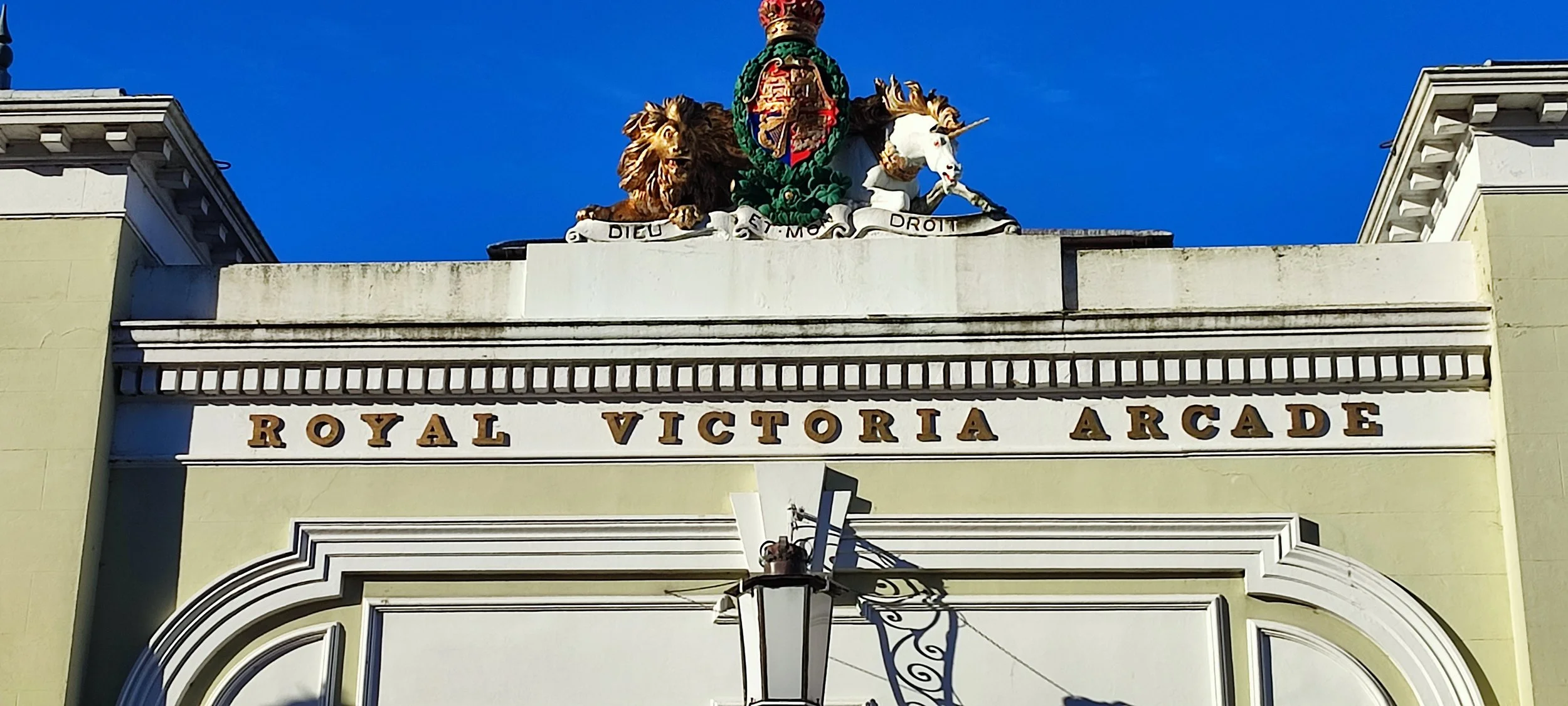
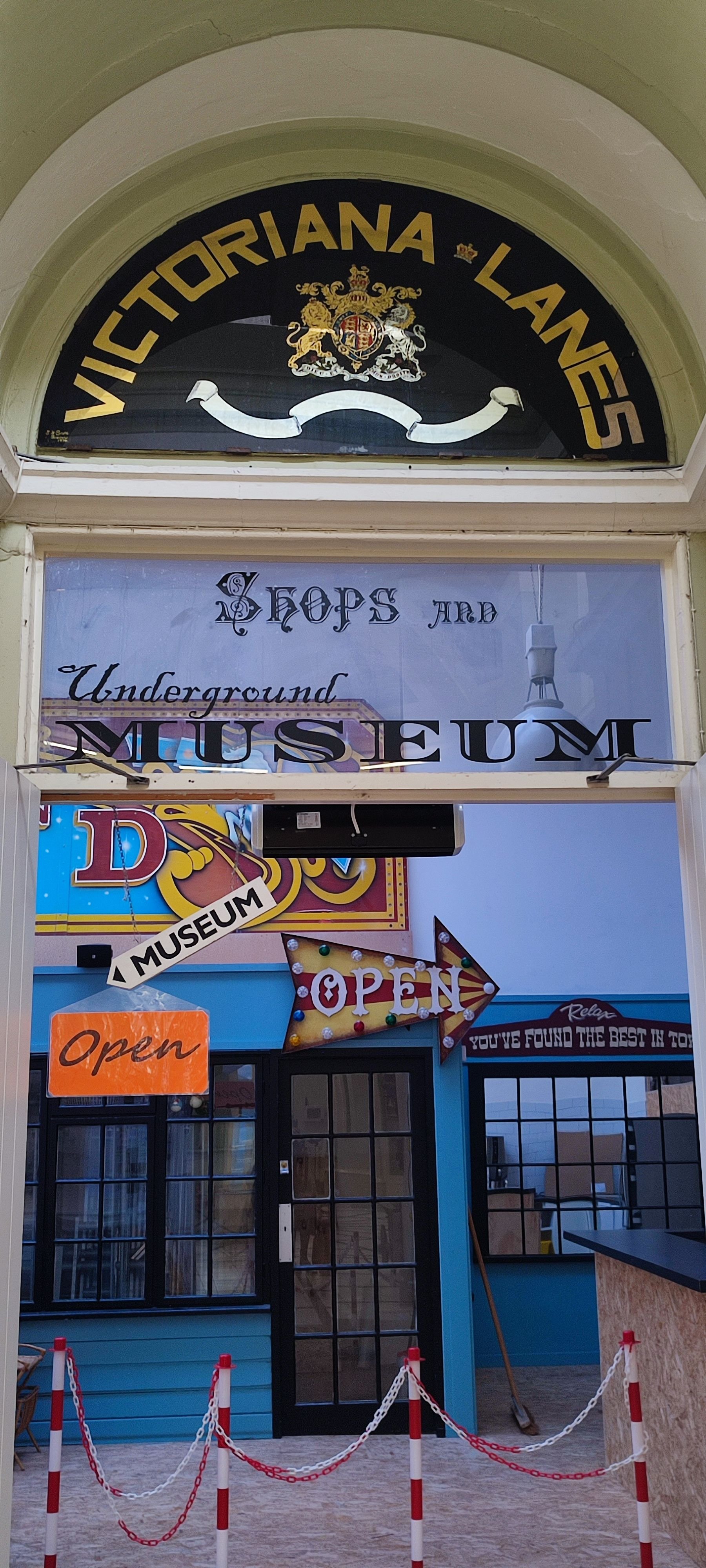
Here, a few pieces from The Museum of Ryde (Royal Victoria Arcade).


Iconic Jimi Hendrix statue
No doubt you will stand in the garden of Dimbola next to the Jimi Hendrix statue for the obligatory photo! But here is its Chairman, Dr. Brian Hinton doing it on the occasion of the 30th anniversary of saving this beautiful historic building from demolition. Jimi is gazing across to the fields of Afton Down, where he headlined the world-famous Isle of Wight Music Festival of 1970.
Suggestions of where to eat, drink & stay
All of the below are discussed elsewhere (with the exception of Monkton Arts and The Cow)
Bonchurch Inn
Ventnor Exchange
The Coast, Cowes
The Spyglass Inn, Ventnor
The Rock, Freshwater Bay
Monkton Arts, Ryde
Dimbola Tea Room, Freshwater Bay
The Cow at Tapnell Farm (near Freshwater)
The Terrace Rooms & Wine
The Albion Hotel, Freshwater Bay
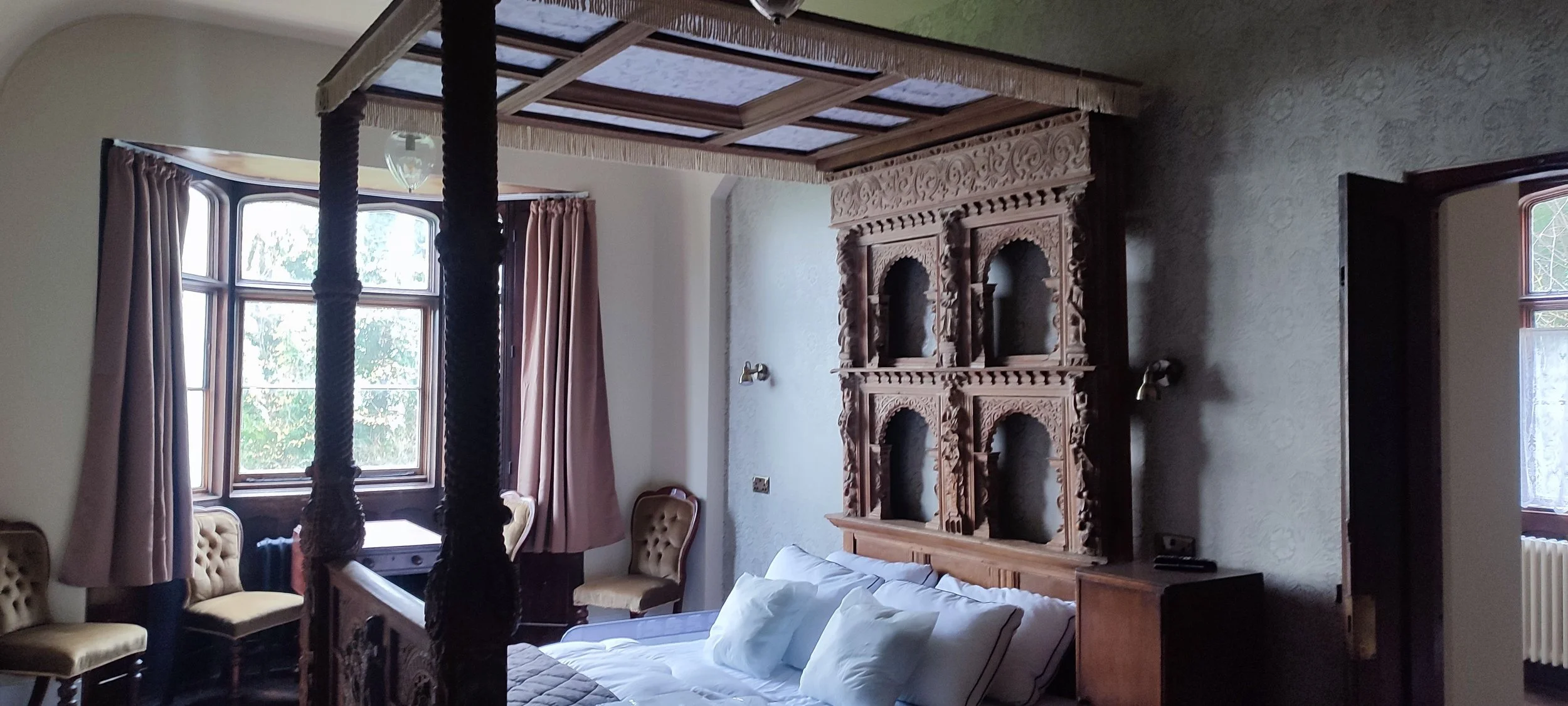
East Dene, Bonchurch (pictured right)
Literary & Musical Wight — In Good Company
Writers, poets and composers have long been drawn to the Isle of Wight — not in passing, but to stay, work, and reflect. The places you’ve explored here can be followed lightly, or traced in depth, depending on which stories, figures or landscapes speak to you most.
As with all our tours, nothing is fixed. These literary and musical threads can stand alone or be woven together with other themes, shaped around your interests and the pace that suits you best.