
Victorian Wight
The Victorian era left an especially rich imprint on the Isle of Wight, not least because Queen Victoria herself chose to live here! Writers, artists, diverse royalty, reformers and social thinkers were drawn here in remarkable numbers, shaping places, ideas and stories that still resonate today.
On this page, you’ll discover how Victorian life unfolded across the Island — from literary circles in Freshwater and Bonchurch and fashionable promenades in Ryde, to the health resorts, artistic communities and quietly radical ideas that took root in Ventnor. Together, these threads reveal a fascinating portrait of a place at the height of its cultural and social influence, explored at an unhurried pace and shaped around your interests.
We invite you to browse these places and stories at leisure, getting a feel for what most captures your curiosity, before deciding which elements you would like us to weave into your own bespoke private tour.
Freshwater Bay (West)
Alfred Lord Tennyson
Freshwater Bay was home for 40 years to Alfred, Lord Tennyson, Queen Victoria’s poet laureate - the longest serving poet laureate that this country has ever had. It was while living in Freshwater that he wrote the poetry that he is now most famous for.
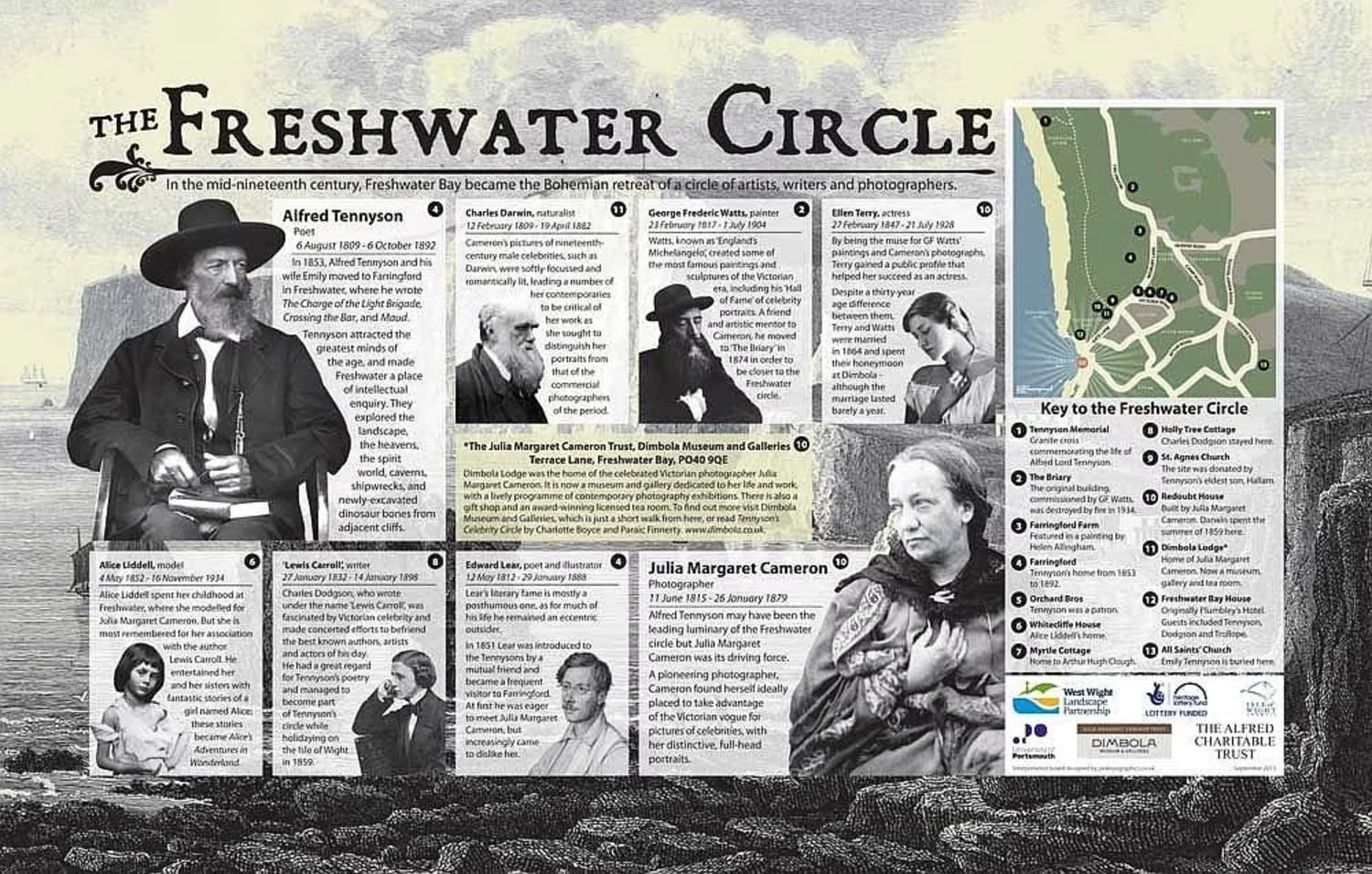
Freshwater Circle
A Celebrity Circle formed around him which is now better known as ‘The Freshwater Circle’. Besides Julia Margaret Cameron (below), this included: painter G.F. Watts, actress Ellen Terry, dramatist Henry Taylor, nonsense-rhyme writer Edward Lear, astronomer John Herschel, novelist William Makepeace Thackeray and daughter Anny (also a writer), photographer and author Charles Dodgson (aka Lewis Carroll of ‘Alice in Wonderland’ fame) and others.
Many of the residents of Freshwater Bay in the Victorian era were the superstars and celebrities of their day. Come and discover why the world and his wife sought out England’s most renowned poet (while trying to give the famous photographer the slip!)
Good to Go Tour
The Freshwater Circle and Freshwater Bay
..and beyond - depending on how much time you have
A visit to and audio-guided tour of Tennyson’s house Farringford (opening times permitting)
Guided tour of Dimbola Museum and Galleries and refreshment break in their award-winning tea shop
Look round the Bay at other houses of note, including a visit to St. Agnes’ Church
For those who are able – a little walk up on Tennyson Down – for those who are not, a drive along to the Needles instead
For the walkers – take a shorter walk or as far as The Needles
Finish with a very short drive to nearby Yarmouth – we would love you to see it! (for more details – see War and Peace page)
Possible visit to an ‘artist at home’ – if of interest!
Farringford
Tennyson’s exquisite former home has now been lovingly restored to its former glory and can be visited by prior agreement – both house and gardens.
The in-house audio guide is second-to-none and you will be given a brief tour of the exterior at the start or end of your visit. This includes the enthralling Victorian garden – designed and lovingly tended by dedicated experts in gardens of this era.
Julia Margaret Cameron
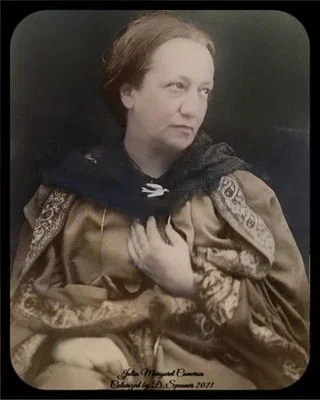
His good friend Julia Margaret Cameron and family bought what were originally two fishermen’s cottages next door to his property (now known as Dimbola Museum and Galleries). During the time she lived there, she started to take portrait photographs in her studio, many were of local unknown neighbours, but also of the world’s ‘great and good’ who beat a path to Tennyson’s door and were cunningly lured into her lair to sit for her!
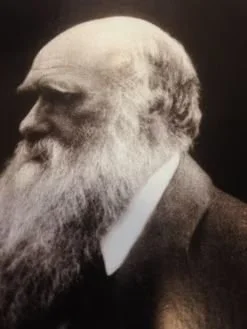
One of them was Charles Darwin, whose famous photograph of him (below right) adorned the reverse side of our old ten-pound notes.
Dimbola Museum and Galleries
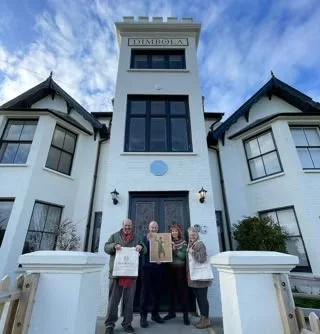
Dimbola was once Julia’s quirky and cosy home and workplace. The galleries contain a mixture of permanent Julia Margaret Cameron galleries and temporary exhibitions by a wide selection of modern day photographers etc..
To the right, the arrival of an interesting exhibition in which I personally was involved in April, 2022 called ‘Creative Cross Currents with India and Sri Lanka’. This linked a couple of modern-day mixed media artists with Julia Margaret Cameron (all of whom had direct or indirect connections with either India or Sri Lanka) as did Julia Margaret Cameron herself, who was born in India and died and is buried in Sri Lanka. Left to right, Dr. Brian Hinton M.B.E. - Exec. Chair, Jeremy Bear - artist, Griselda Bear - curator and Jane Richter – assisting with admin and showing my documentary ‘Cameron, Coffee and Calcutta: A Travelller’s Tales’ for the very first time.
Cameron is now regarded as one of the most influential portrait photographers of all time. It will be a complete pleasure to explain to you what is special about her work, which she herself quite rightly considered to be ‘high art’.
World fame within photographic circles
Julia Margaret Cameron gained her worldwide recognition in part through the efforts of her great-niece Virginia Woolf, who did much to publicise Julia’s work.
You may have already dipped into my documentary*, made by Lutz Wolters. Made pre-, during and post-Covid, it later won an award from the Bengali community of London, presented to me at an awards ceremony event at the Houses of Parliament.
Here to the right, a very short extract from a much longer article by Nayantara Mazumder, a ‘Telegraph India’ journalist, who informally interviewed me over a leisurely brunch in The Tollygunge Club prior to one of the 10 Indian showings of my documentary. She had already heard about Julia Margaret Cameron from her grandmother (Debalina Sen-Ray) – by amazing coincidence, one of twin Indian pioneer portrait photographers!
*If you would like to include in your itinerary a private showing of my documentary, together with a follow-up Q and A session, I will be very happy to show it.
Julia and Jane: Ladies of Calcutta
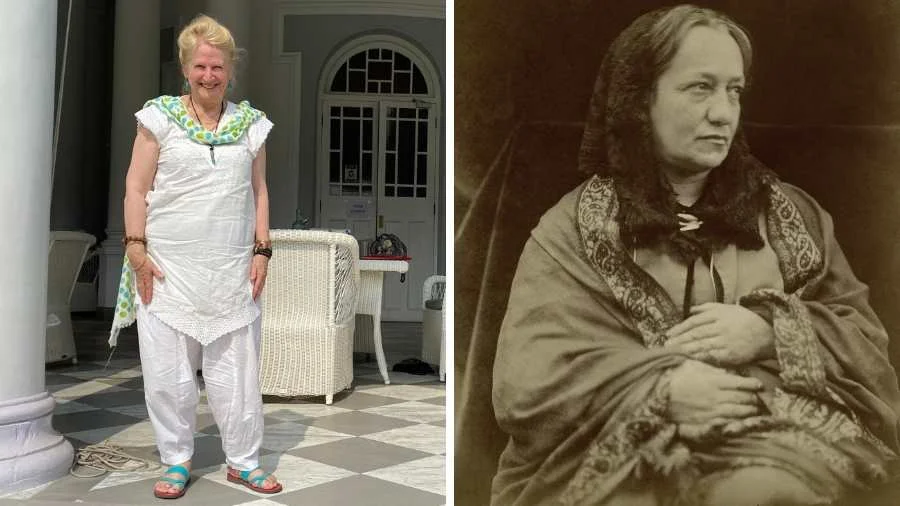
“It was fascinating talking with Jane Richter about Cameron’s life, photography and links to our beloved city. Richter is in town to, among other things, talk about Cameron and her connection to Kolkata at the second event of the Glenburn Culture Club and it was illuminating to spend a morning with her discussing Cameron, Kolkata, and the unique conditions under which women in photography have historically had to operate.
Richter is a friend of Dr. Brian Hinton, Chairman of Dimbola Museum and Galleries, Cameron’s former home and workplace.
There is no one better to talk about Cameron than Richter, who tells me that she too was once called ‘The Lady of Calcutta’ by Dr. Hinton.
Why is this interesting? Because Richter’s session about Cameron’s life in our city, quite serendipitously, is titled ‘Lady of Calcutta: Through a Victorian Lens’.”
St. Agnes Church & immediate vicinity
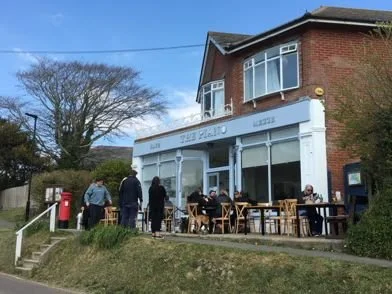
Take a peep inside the quaint St. Agnes Church – one of the country’s mere handful of thatched churches. It was built on land donated by Hallam Tennyson, eldest son of the great poet. It nestles just below Tennyson Down, opposite what was once the home and workplace of Queen Victoria’s piano tuner (now home to The Piano Café (below right). It is also diagonally opposite Orchards (below left), the delightful village stores where the owners still possess records of Tennyson’s daily purchases!
Tennyson Down

If you have time and want to blow away some cobwebs and maybe glimpse some wildlife, we can take a climb up Tennyson Down with its awe-inspiring views of both The Solent and The English Channel.
Not for nothing did these views inspire so many of Tennyson’s famous lines. The great poet often walked up here twice a day, declaring that the air here was ‘worth sixpence a pint’!
The Albion Hotel
The Albion Hotel (see ‘Eat, Drink & Stay) is a stone’s throw away – also at the foot of the Downs. The members of The Freshwater Circle were familiar with an earlier incarnation of this hotel with the same name. A yet earlier version was called The Cabin, still the name of the current hotel’s bar.
The Albion Hotel in bygone days
Jane at The Albion Hotel with Joseph Warren, its General Manager
The Albion Hotel as it is today
J.M.W. Turner once stayed here and painted ‘Fisherman at Sea’, once held to be of the Needles, but now more generally regarded as being Freshwater Bay (which it more closely resembles) – right next to The Albion.
Suggestions of where to eat, drink and stay
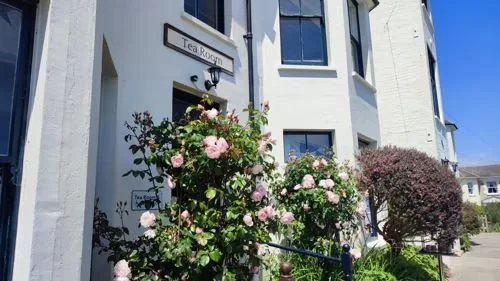
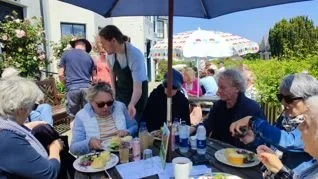
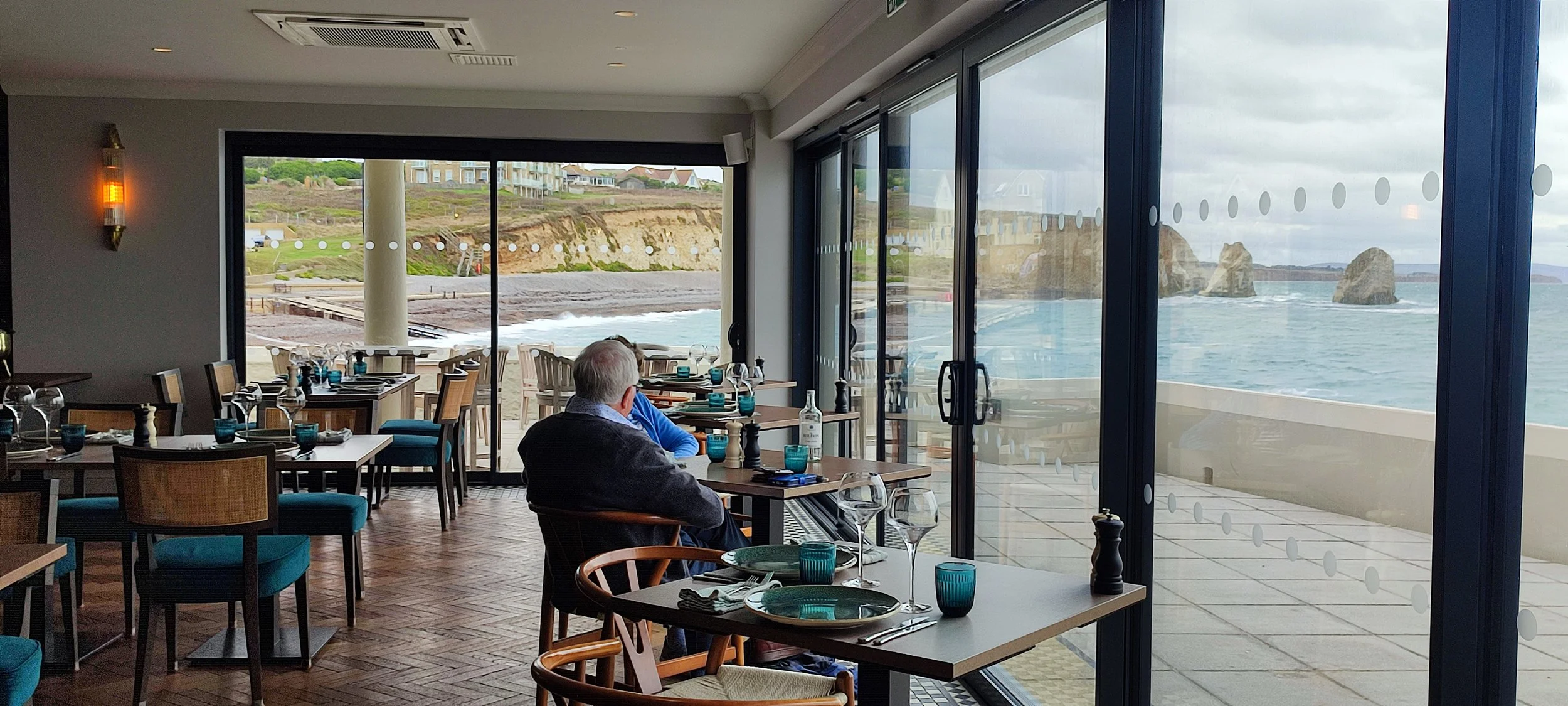
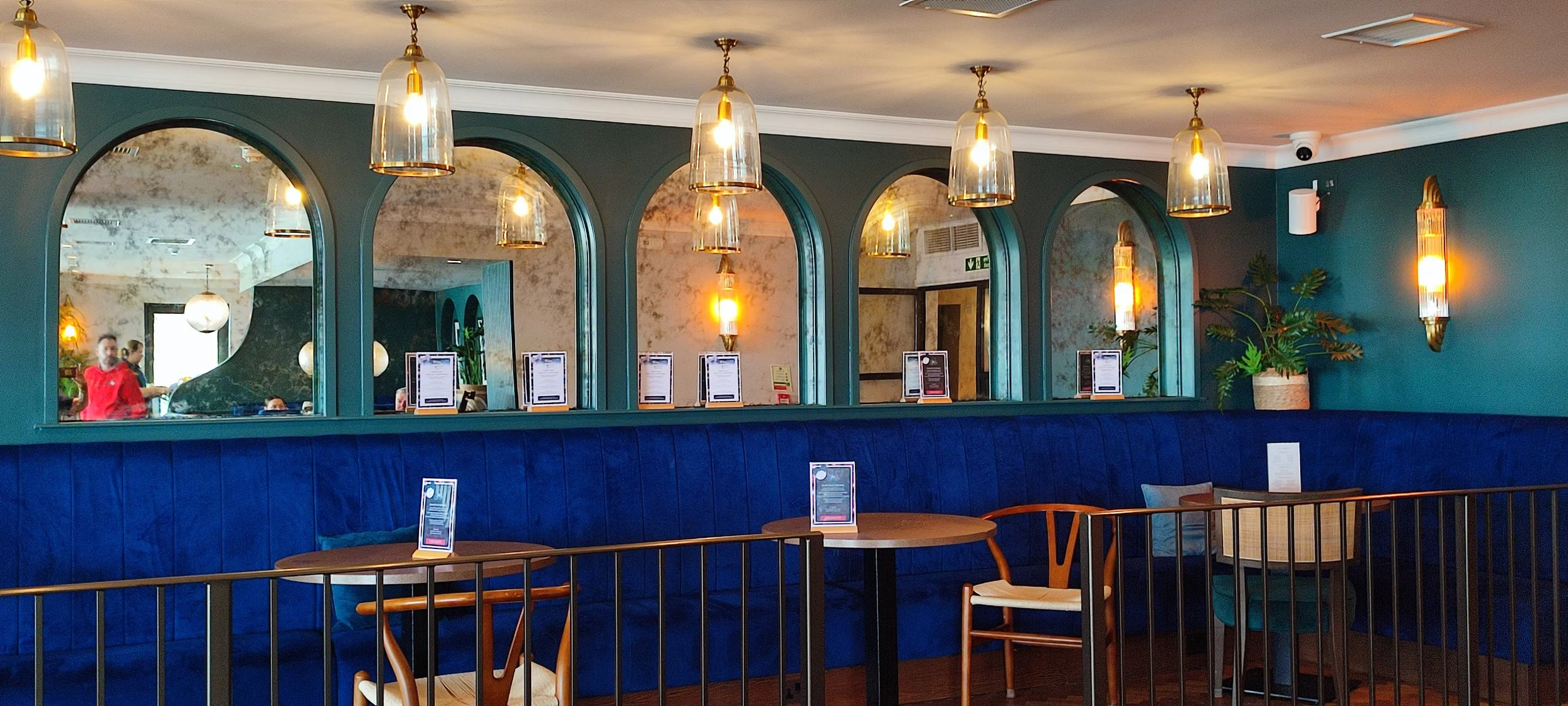
The Rock (Albion Hotel)
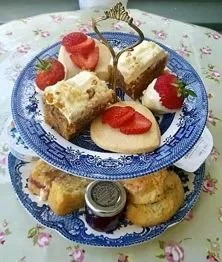
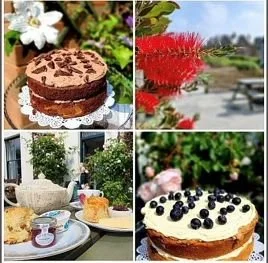
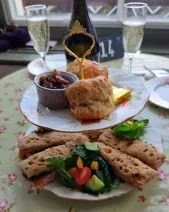
Dimbola Tea Room
The Piano Café
Yarmouth Eateries and Watering Holes – please see list on War and Peace page
Accommodation – The Albion Freshwater Bay or The George or The Bugle Inn in Yarmouth
Ryde
(North-East)
Right royally fashionable
Ryde in its Victorian heyday was much frequented by royalty, both British and European. It was equally frequented by other rich and famous people - movers and shakers of their day.
The largest town on the Island, it is often referred to as ‘the town on the beach’. If you walk up the pier, which is the oldest in the country and one of its longest, you will easily understand why.
The first stone of the pier was laid on June 29th 1813. This allowed ships’ passengers to avoid the indignity of being carried across the sands to or from a ship on a porter’s back! A second pier was opened alongside it in 1864 for a horse-drawn tram and in 1880, the railway line was extended to the pier head. A third was added later.
A fun ride
For those of you who love trains, and that’s quite a few of you – this is a fun thing to do. Not only can you ride on Island Line from the ‘wet’ to ‘dry’ end of the pier (Ryde Esplanade) but you can then continue: Brading, Sandown, Lake and last stop, Shanklin. You can also connect to the Isle of Wight Steam Railway to make a heritage journey – something which is very popular with both clients and locals alike!
Why Ryde rose to prominence in Victorian times
It became a popular and fashionable resort primarily because of the rapid expansion of yacht racing from beyond the confines of London’s River Thames. Equally, Victoria and Albert choosing to live at Osborne, a mere few miles away, put the place well and truly on the map. Its location directly across the Solent from Portsmouth was another reason for its importance.
Ryde versus Portsmouth
Connected to it being the home of the British Navy, Portsmouth had the reputation of being both dirty and dangerous. Ryde became popular with the military and with senior ranks of the Navy based in Portsmouth who wished to make a quick escape from its filth and squalor by simply heading across the Solent. There, they were rewarded with the genteel elegance with which Ryde was identified.
Royal Victoria Yacht Club (Prince Consort Building)
Queen Victoria was often to be found in her private ‘Royal Victoria Yacht Club’ which her husband, Prince Albert had built for her in 1846. Indeed, he personally laid its foundation stone. This was because women (even Queens), were not allowed to set foot inside the Royal Yacht Squadron in those days. Albert saw to it that she got her own Club in Ryde’s Prince Consort building. This subsequently moved to Fishbourne in 1961, where it still is.
The Royal Victoria Arcade
Shopping arcades first appeared in Paris in the latter years of the 18th century. They provided a nice change from the hustle and bustle of high streets, and the unpredictability of the weather. The first arcade in England, the Royal Opera Arcade, built by John Nash between 1816 – 1818, formed part of the Royal Opera House, which burned down in late 1850s. The Burlington Arcade in Piccadilly came hot on its heels and was a huge success.
This fact, coupled with the increasing numbers of people visiting the Isle of Wight and Ryde in particular, may be what prompted local apothecary William Houghton Banks to speculate and fund the Royal Victoria Arcade in 1835-6.
A young Princess Victoria had holidayed on the Island with her mother a few times from 1831, and was asked whether she would agree to the new building being named after her, and she agreed. The foundation stone was laid on May 25,1835, the day after her sixteenth birthday. The architect was William Westmacott and the builder, Thomas Saunders.
Saved from demolition in 1974, we can count ourselves fortunate to still be able to admire the paintings on the rotunda ceiling which depict the seasons and months of the year (albeit not entirely original).
There is still an original stained-glass window at the back of the arcade inscribed ’PV’ (Princess Victoria).
The Arcade’s first shops included one which sold turtle soup, another was a wax flower maker, then a drapers’, a photographer and many more.
Museum of Ryde
A small but jam-packed museum, full of interesting bits and pieces. It is quirky and entirely fits its surroundings. The volunteers could not be more lovely and helpful – they will make you really welcome. As they rightly say, they have 200 years’ worth of Ryde’s fascinating history. Ryde is home to the oldest pier and first carnival in the country.
Among other things, it also manages to cram in the ‘Donald McGill Museum’ (most popular postcard artist ever), who designed over 12.000 ‘saucy’ postcards.
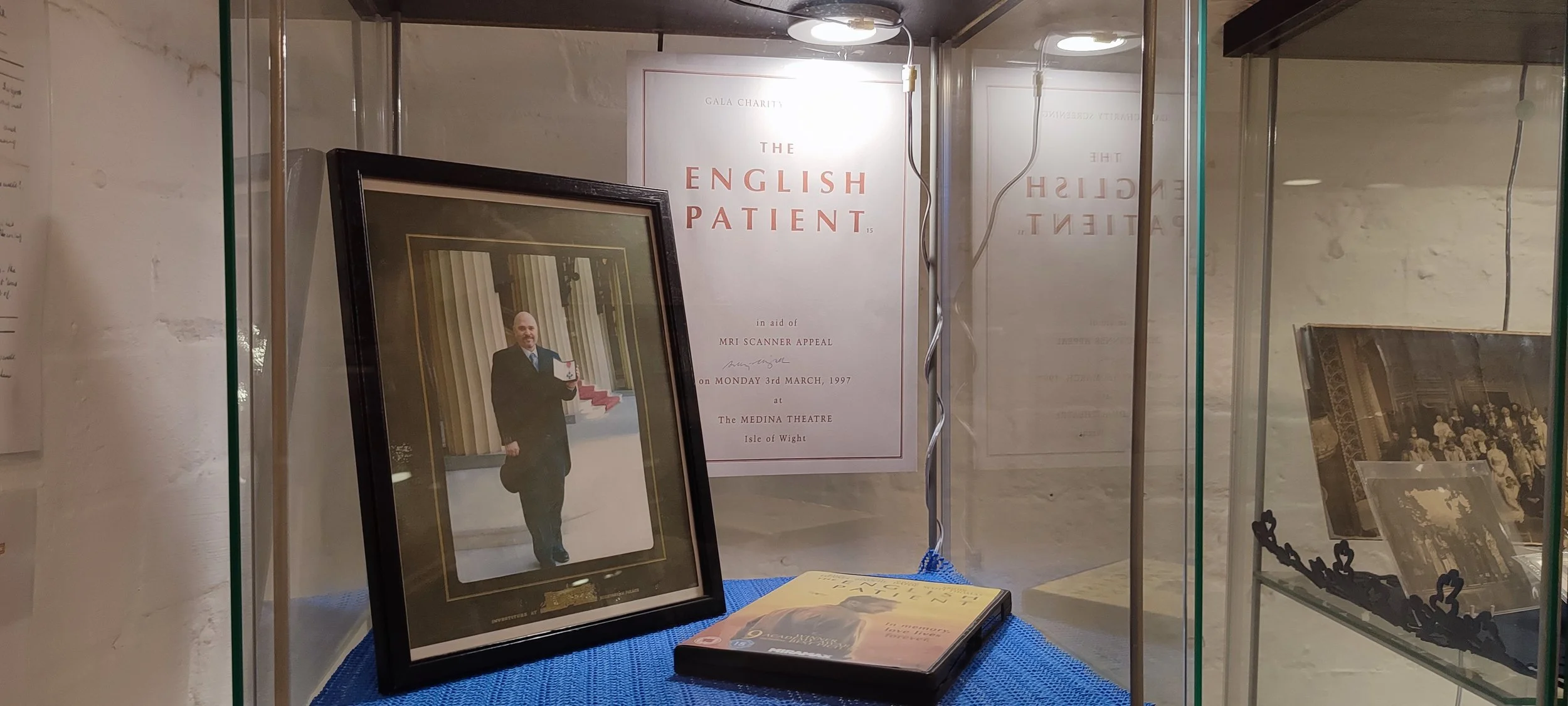
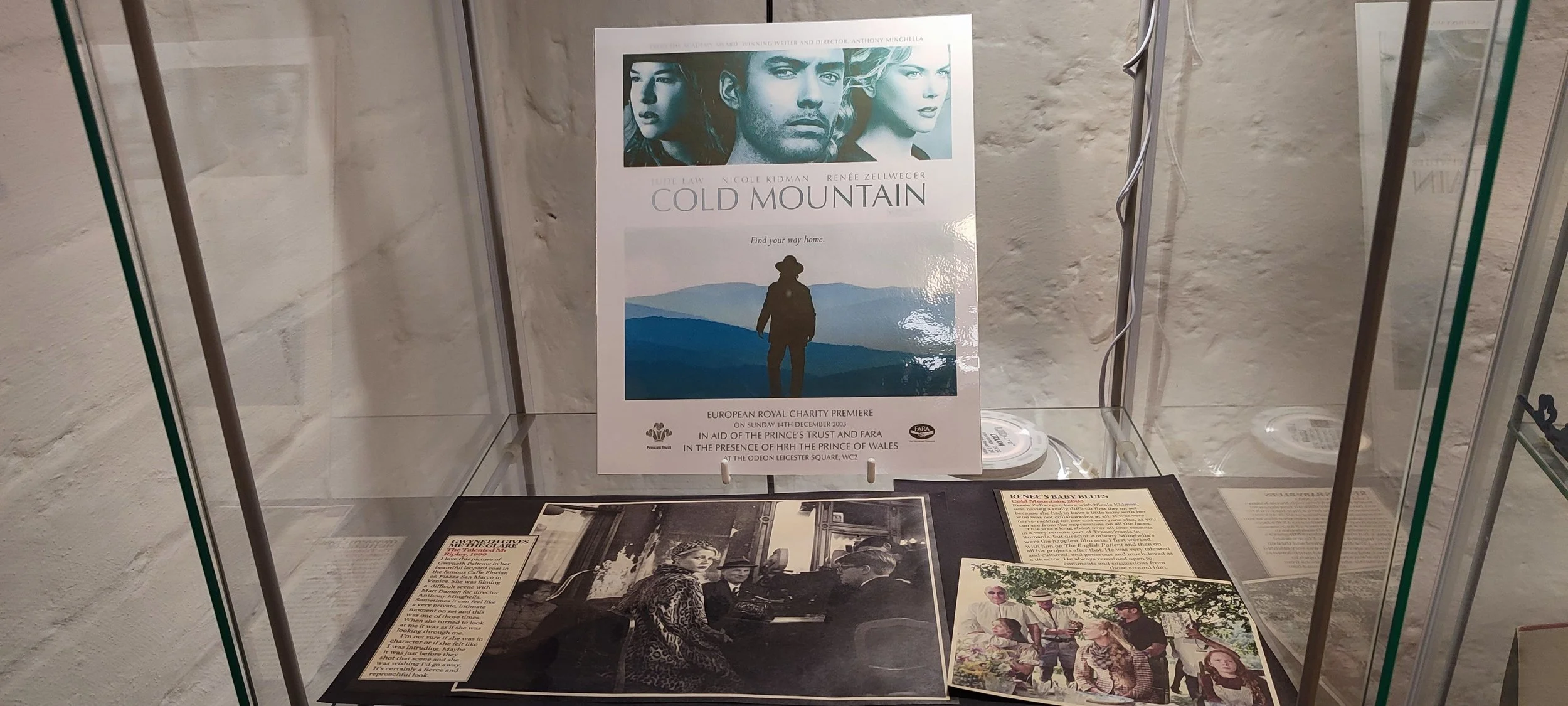
Ryde was home to film producer and director Anthony Minghella (of ‘The English Patient’ and ‘Cold Mountain’ fame)
Ryde today
Golden Sands and Union Street
Ryde boasts the widest golden sandy beach on the Island. Union Street is the town’s main road – and quite a steep one! It joined what was once its farming community on the upper level with its fishing community below. From its top end, you will be treated to a magnificent view across the Solent, looking directly at Portsmouth’s gleaming white Spinnaker Tower, now no more the sad sight it would have presented us with in Victorian times.
The Hovercraft
From the beach, you can watch the hovercraft thundering in and out and learn the story behind their invention. They were built right here on the Island at nearby East Cowes. Now, the commercial route between Ryde and Southsea is the only remaining one in the world. (For a little more information, please see our ‘Getting Here’ page under the Travel Information heading.)
Although Ryde retains its Victorian feel, today, with its good selection of bars, clubs and restaurants, it also has a very modern one.
We can’t wait to take you on a walking tour of Ryde, adding a lot of further information and pointing out many interesting places. We also have a few surprises to show you!
The Blacksheep Bar
Suggestions of where to eat and drink
We recommend:
RT Café Grill (see ‘Eat, Drink & Stay’)
Ristorante Michaelangelo
The Blacksheep Bar
The King Lud (for just a drink in a really authentic Isle of Wight pub – where better?)
Ristorante Michelangelo
RT Café Grill
The King Lud
Ventnor (South-East)
Ventnor has a distinctly Mediterranean flair and a history founded almost entirely on health. It’s the Island’s hilliest area and affords simply spectacular views. It enjoys a micro-climate which first became generally known about back in the 18th century.
Ventnor was not only once known as England’s Madeira, but also as its Crimea!
Tour it with us and all will be revealed, Allow us to introduce you to some former famous shorter- or longer-term visitors including Mahatma Gandhi, Karl Marx, Ivan Turgenev and Sir Winston Churchill, to name but a few!
Good to Go Tour
Health, Beauty and Art
Ventnor seafront – insightful information about the history around health as well as aspects of its literary heritage – to say nothing of appreciating its spectacular beauty!
Learn a little about the Victorian Russian radical ‘invasion’ of Ventnor (this is covered in greater depth in our ‘Cradle of the Russian Revolution’ tour (Literary & Musical Wight). N.B.– that particular tour can only be booked for a minimum of 10 people.
Visit Ventnor Heritage Centre
Brief time for shopping – some quirky and interesting shops here!
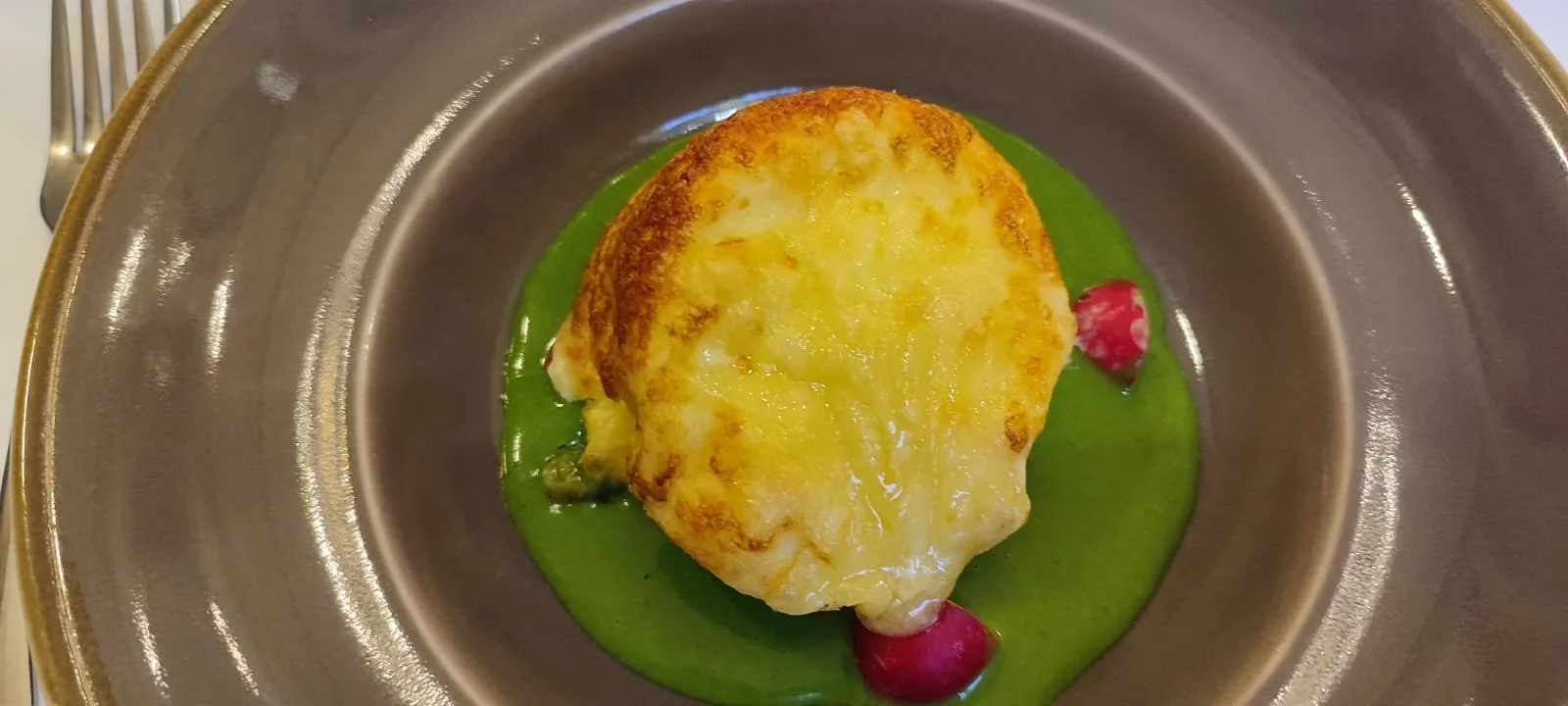
Take a relaxing moment at The Royal Hotel (the Island’s oldest) – possibly sampling its signature cheese soufflé (made with one of our delightful Island cheeses called gallybagger shown further below) – or, if later in the day, a legendary afternoon tea.
Wend our way (either by car or you may wish to do some walking) to the famous Botanic Garden (in-house detailed guided tour can be included)
Steephill Cove - no vehicular access here and only suitable for those steady on their feet. If we are lucky and they are open – a crab pasty from The Crab Shed is an absolute MUST (if you like crab that is!)
St. Lawrence Parish Church – to see some truly fabulous pre-Raphaelite art in the form of stained-glass windows by William Morris, Burne Jones and Ford Maddox Brown – namely the very best! Formerly housed in the chest hospital chapel down the road, they were moved here after the hospital closed down in 1969. The theme of the windows is mainly that of healing (see photo on left).
You might also like to round off your tour either with a visit to nearby Binnel Studios (if we can arrange it – is by appointment only) or possibly have a private meet-up with a local artist (please see Spiritual & Artistic Wight section – bottom of the page) This could be as well as or instead of other parts of the tour. Or you might prefer a final pit stop at Ventnor Exchange (which runs the Ventnor Fringe and serves some great beers etc. – also a good place to try some more of our local Island cheeses!)
To round off – if you can spare an evening in Ventnor and are lucky, you might be able to take in an event at Ventnor Arts Club.
There are no times given with this tour – it is completely flexible (as in fact our tours always are) to fit in with your own time schedule. Also, you may not want (or have time) to do everything mentioned. This will need trimming to suit you.
Ventnor and Health
Ventnor started life as somewhere Victorian Londoners could flee to, as a respite from the capital’s dreadful pollution and disease. By contrast, It offered glorious sunshine and clean, fresh air. So those who could afford to do so, came to seek alleviation of symptoms if not a cure, from tuberculosis and other respiratory diseases.
The Royal National Hospital for Diseases of the Chest
The town’s benefits were recognised by a few Victorian doctors (one of them, physician to Queen Victoria herself). Thereafter, the place developed as a ‘health resort’. This resulted in the building of what would later become ‘The Royal National Hospital for Diseases of the Chest’ which existed for approximately 100 years.
Karl Marx and others
The surrounding trappings of health included a network of private doctors and nurses and hot and cold bath houses and bathing machines. Karl Marx was the best-known patient of one of these private doctors.
Royal National Hospital for Diseases of the Chest
Ventnor Botanic Garden
If you love plants and gardens – particular of this standard – then this is a must-see!
Proudly standing on the site of the former National Chest Hospital, The Botanic Garden is getting just a quick mention here – as how could we possibly exclude it in a section entitled ‘Ventnor’? However, for full details – please view ‘Gardens & Villages’.
Ghost walk with a difference
And if it’s a superb’ ghost tour with a difference’ that you are interested in, please see ‘Spiritual & Artistic Wight’. (This doesn’t have to happen after dark – we can work it into your own time schedule.) These take place all over the Island – but we find the one in the grounds of the Botanic Garden particularly special.
Steephill Cove – right next door
Again – a must see if you love hidden coves and stunning scenery. It’s a real insider tip – but please see ‘Gardens and Villages’ for more detailed information. And if you love fresh seafood (couldn’t be fresher!) – and are fond of crab – a crab pasty (Ventnor crab) from Amanda Wheeler’s ‘Crab Shed’ is definitely the order of the day! (N.B. not suitable for those who have mobility issues, as no vehicular access.)
The Royal Hotel
This is the oldest hotel on the Island – visited by both Queen Victoria and Charles Dickens to name but a few. If you would like to join them – you can eat, drink or stay here.
On our ‘Health, Beauty and Art’ tour you will definitely have the opportunity to make a stop here.
The Russians in Ventnor
Almost incredibly, it was from Victorian Ventnor that Russian intellectuals, radicals and revolutionaries were plotting to overthrow the existing Russian regime back home – such a task, from this (for them) hidden away gem of a place on a faraway island!
There were a lot of them here – in fact, so popular did it become that it was affectionately referred to as ‘Ventnorgrad’ by its Russian residents!
If you would like to know more about the ‘Russian Revolutionaries on the Isle of Wight’, why not sign up to our super new tour, detailed at very bottom of this page. We think it will sell out fast – so please hurry!
The Russians and St. Augustine Villa
The trendsetting Russian radical who led the way to the large wave of his fellow countrymen arriving to enjoy both the scenic delights (as well as the health benefits) that this beautiful town has to offer, was Alexander Herzen, who resided in St. Augustine Villa when on the Island.
Ventnor today
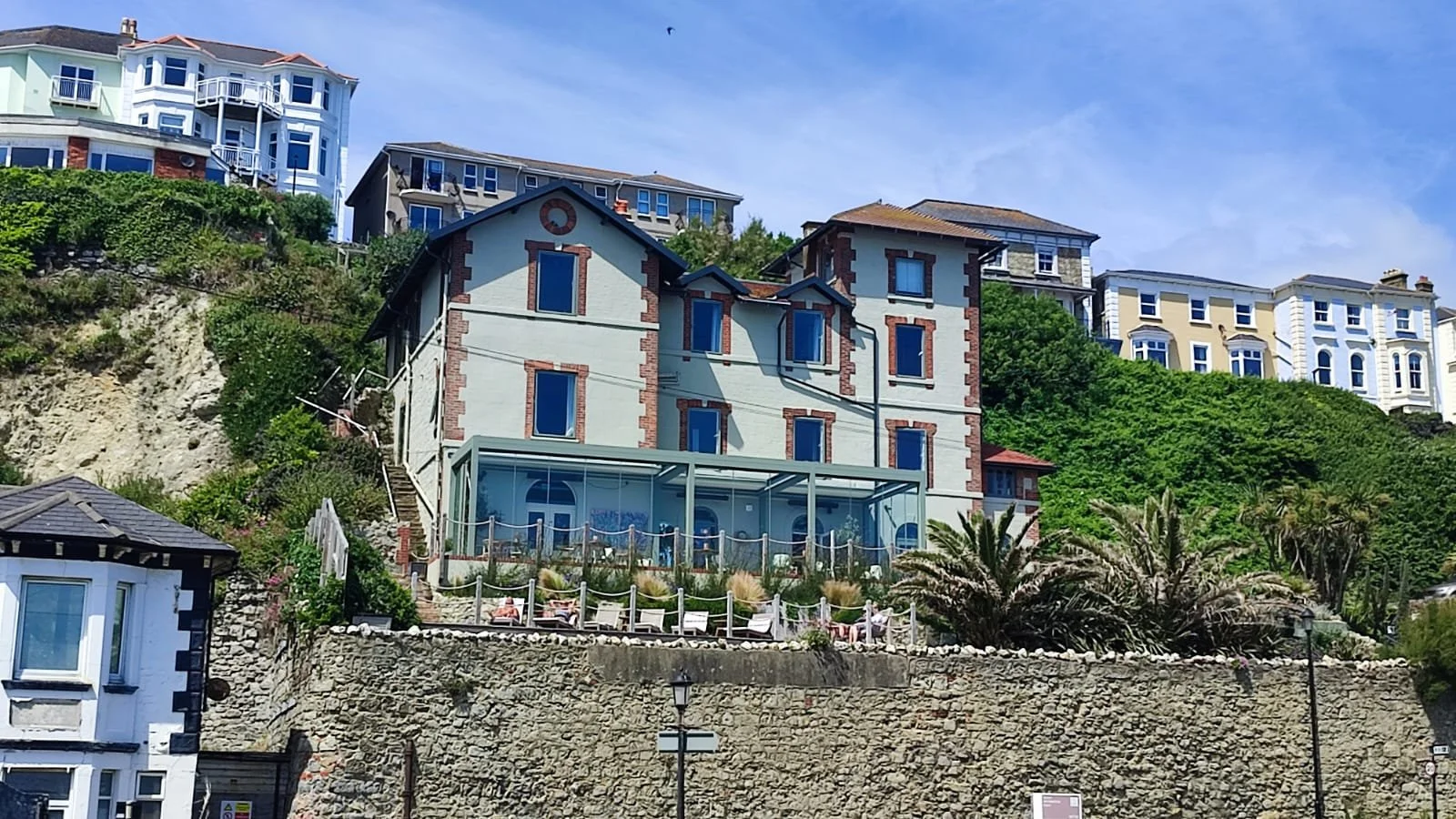
Today, St. Augustine Villa has been converted into a simply magnificent luxury hotel called ‘The Terrace Rooms with Wine’. Please read more about it on our ‘Eat, Drink & Stay’ page and find it again, prominently featured in both Stephan Roman’s exciting scheduled tour in late September tour called ‘Royalty and Radicals’, as well as in our ‘Victorian Literary tour’ which is scheduled for earlier in the same month. Please find both tours detailed at the very bottom of this page (and please sign up fast to avoid disappointment)!
Ventnor‘s modern day artistic scene
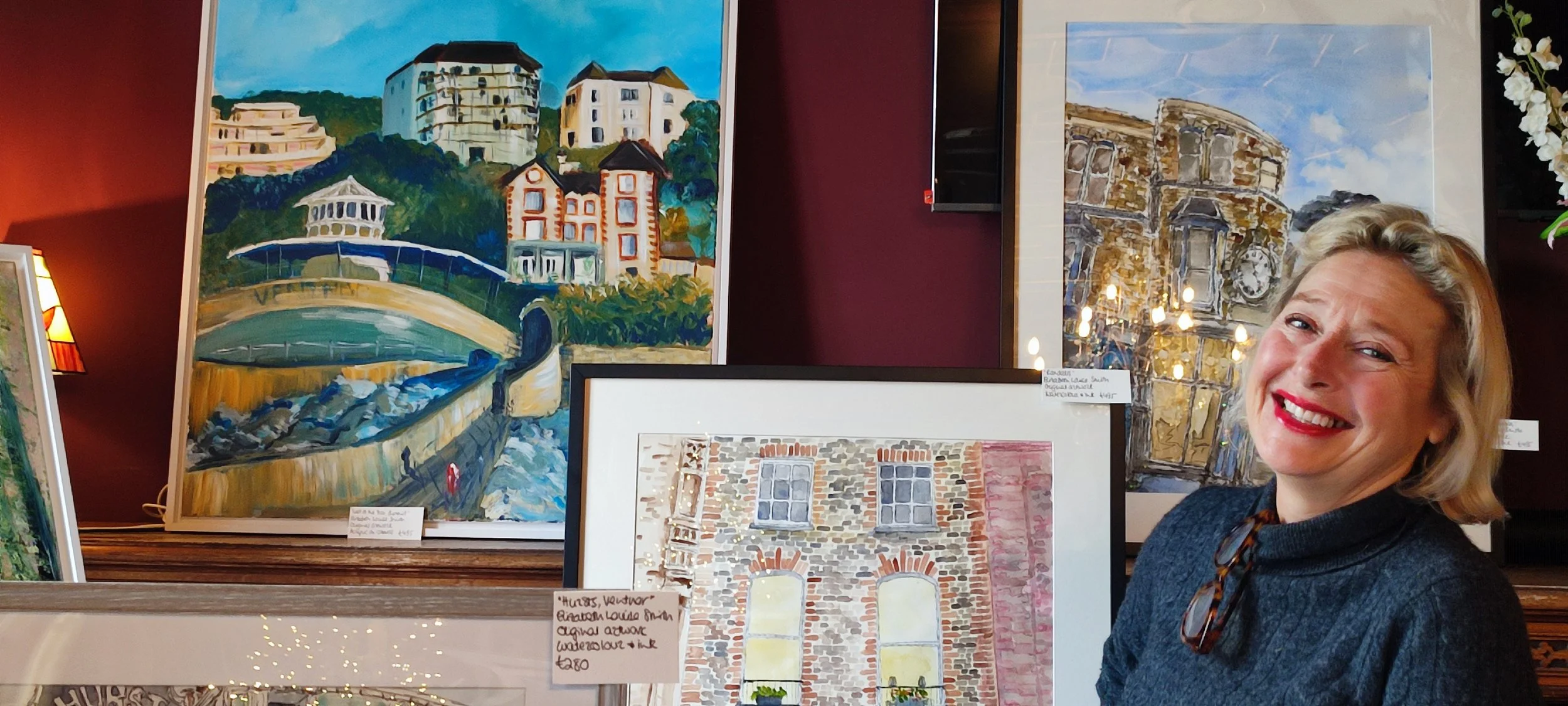
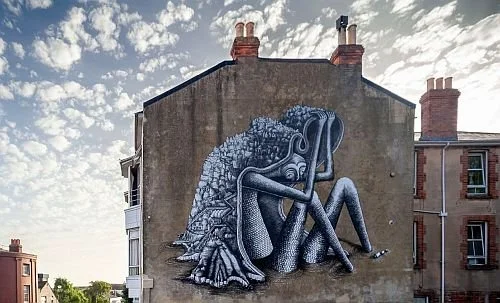
Ventnor today has a claim to fame as being the Isle of Wight’s most ‘arty’ place, known for its highly successful Fringe Festival run by Ventnor Exchange and its Arts Club – both first rate. You may wish your visit to coincide with the dates of this Festival – many people do!
It can’t be over-emphasised how many artists live here and in neighbouring Bonchurch – just as they do in Freshwater, West Wight.
This incredible view of the south coast from Blackgang Chine (almost Ventnor) right through to the Needles (beyond Freshwater) possibly gives some indication as to how stunning scenery can influence artists – be they home-grown or from further afield. Perhaps no coincidence then that there are so many artists residing along this stretch of coastline.
Suggestions of where to eat, drink and stay
The Royal Hotel
The Plantation Café (Ventnor Botanic Garden)
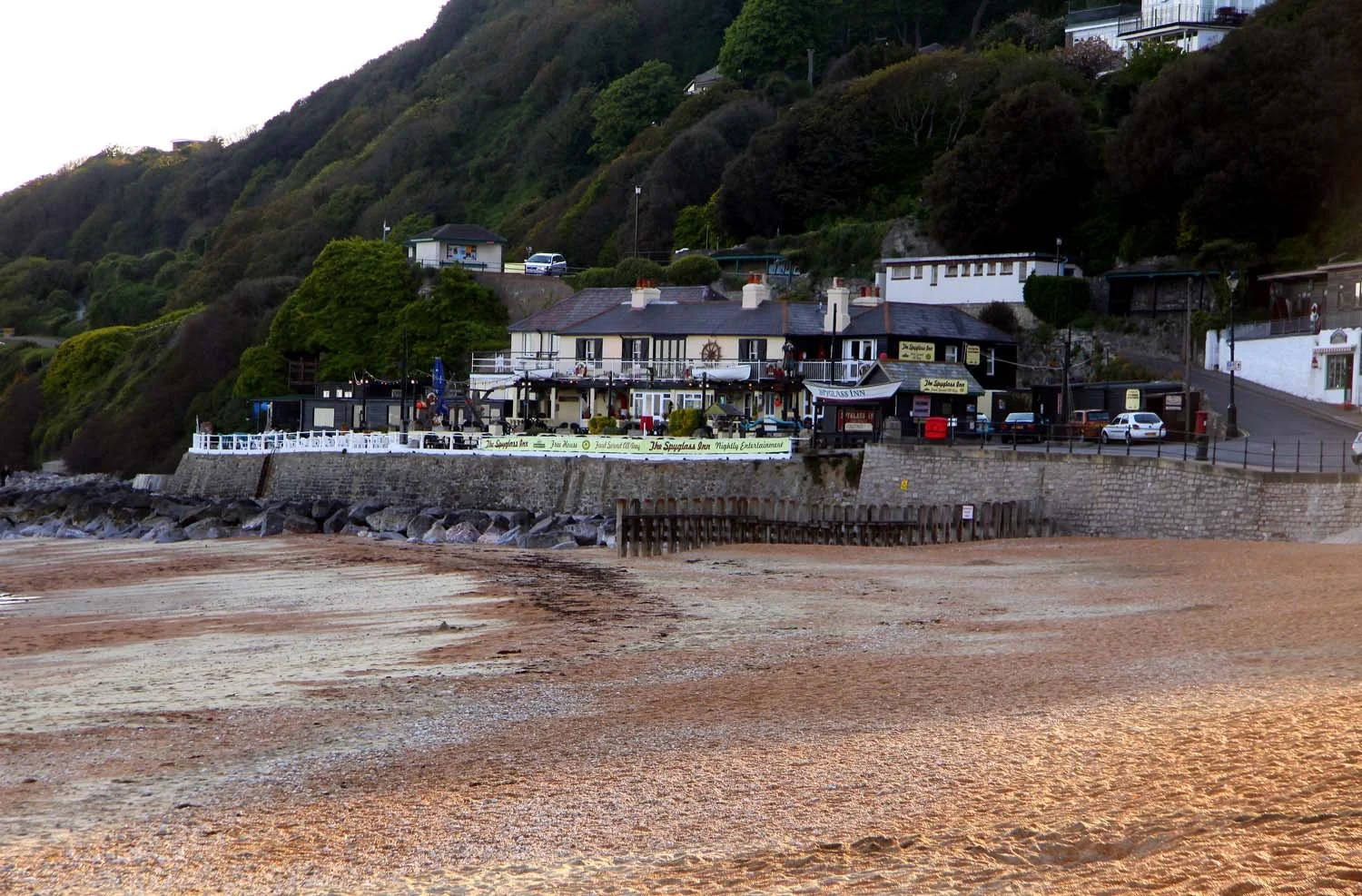
The Spyglass Inn
The Crab Shed
Ventnor Exchange
The Terrace Rooms with Wine
Good to Go – Super Deluxe 3-day scheduled Victorian Literary tour
Wednesday September 2nd – Friday September 4th
The tour outlined below is brand new and we hope you will find it as exciting as we do! It’s a collaborative venture featuring several local ‘movers and shakers’ with whom we work on a regular basis. Unlike our normal tours, it isn’t personalised, but one which anyone can sign up to (minimum 10 - maximum 14 people). No need to worry – you will all be like-minded individuals who may start out as strangers but won’t end up that way! Obviously, if you want to book all the spaces for your own personal group, you are entirely at liberty to do so – this is on a ‘first come first served’ basis and once it is full, it is full – so booking at the earliest opportunity is to be strongly advised.
The tour is all-inclusive – hotel, transport once on the Island (except taxis upon arrival to take you to hotel), itinerary, food and drink (served with meals and anywhere else they are mentioned.
Please speak to us direct regarding prices and booking.
Nearest arrival point on the Island would be Yarmouth (crossing from Lymington) however, we suggest you choose the route that suits you best. Please see ‘Getting Here’ page.
Day 1 – Wednesday September 2nd
Arrival in The Albion Hotel, Freshwater Bay around 4 p.m. (or later if necessary) with welcome cocktail and nibbles. (If you require a taxi and want our help – please let us know. N.B. taxis to hotel aren’t part of the package). ‘Settling in’ time – you won’t want to miss taking advantage of your wonderful rooms and perfect location whenever possible! (For more information about the hotel – please see both ‘Eat, Drink & Stay’ and ‘Victorian Wight’ pages.)
6.00 – 6.45 p.m. Introduction from Jane on the Isle of Wight and literature, including a 20-minute excerpt from her documentary ‘Cameron, Coffee and Calcutta: A Traveller’s Tales’, which will give you a taste of the literary and artistic importance of Freshwater Bay in particular. Tonight’s welcome briefing is specifically aimed at tomorrow’s programme but will of course include a general overview.
Dinner – 7.45 p.m. at the hotel’s wonderful restaurant ‘The Rock’. Why the name? Just look out of the window! (See left) (Possibility of a shortened repeat of my overall introduction to the tour for latecomers, either immediately before dinner or later in the evening, if desired).
Day 2 – Thursday September 3rd
Breakfast
10.15 - 11.30 a.m. Morning tour at Farringford (home of Alfred Lord Tennyson, Queen Victoria’s poet laureate).
11.45 Dimbola Museum and Galleries for tea/coffee at their award-winning teashop, followed by a short tour of the galleries themselves.
1 – 2 p.m. Reconvene in teashop between for a light lunch.
Hereafter follows a choice:
Walk up to Tennyson Monument for those who wish (hilly), a stroll round local ‘Freshwater Circle’ literary haunts (flat) or for complete relaxation, return to hotel to maximise use of your wonderful terrace!
4.15 p.m. reconvene at hotel (latest) for tea and biscuits ahead of a 4.30 – 5.30 p.m. talk by Ian Dickens, great-great grandson of Charles Dickens, who will be sharing ‘insider information’ about his famous forebear, as well as letting us in on the secret of the extent to which his illustrious ancestor has impacted his own life.
5.30 – 6.20 p.m. - time to take a breather and relax.
6.20 p.m. leave hotel to drive to the Medina Bookshop, Cowes.
7 p.m. pre-dinner drinks and nibbles and fascinating short talk by Peter Harrigan, Director of Medina Publishing. Peter will be able to talk you through some themes and examples of current Isle of Wight literature. Here we will be joined by Stephan Roman (author of ‘Isle and Empires’, also published by Medina Publishing). Peter will make the initial introduction to Stephan.
8 p.m. dinner at the Smoking Lobster, Cowes (one of the Island’s top seafood restaurants - also non-seafood options available). Ian Dickens, Peter Harrigan and Stephan and I will all be with you – enabling you to carry on good conversations and ask any questions that you didn’t get to ask earlier!
Drive back to hotel.
Day 3 Friday September 4th
Breakfast
Check out – bring luggage with you
Leave hotel at 9.15 for Bonchurch
10.00 – 12.30 Literary Walk with Sue Lowday (Dickens, Swinburne, Macauley etc.) Let Sue, a Bonchurch resident and local literary expert, beguile you with her tales!
12.30 depart Bonchurch for neighbouring Ventnor.
12.45 – 2.00 p.m. luxurious light lunch in a stylish setting (on the terrace itself, of course, weather permitting) at ‘The Terrace Rooms with Wine’, Ventnor (formerly known as St. Augustine Villa - where Alexander Herzen, a leading opponent of the Romanovs, used to stay in the 1850’s).
2.00 – 2.45 p.m. a talk by Stephan Roman about the Ventnor Radicals who actively opposed Russia’s Imperial rulers in the middle years of the nineteenth century. The political, literary and social thinking that emerged from Ventnor helped lay the foundations for the Russian Revolution of 1917.
2.45 – 3.15 p.m. guided walk along the Esplanade in Ventnor, passing where many radicals stayed including Count A.K Tolstoy and the writer, Ivan Turgenev.
3.15 p.m. minibus pick-up from The Spyglass Inn up to the Ventnor Heritage Centre.
3.20 – 4 p.m. visit to Ventnor Heritage Centre.
4.00 p.m. from here, minibus to Cowes to catch the next Red Jet crossing back to Southampton.
Some of you may wish to spend another night or two, and who could honestly blame you! We can help you arrange this if you would like and even guide you round some more Island highlights – the jewel that is Osborne House etc. If interested, please mention this when you get in touch with us.
Royalty and Radicals tour
Brand new! Good to Go - 3-day scheduled tour
Wednesday September 23rd – Friday 25th, 2026
An exciting three-day tour, mainly based around Cowes in the north - with its strong connections to the Russian Imperial family, and Ventnor in the south-east, where the same could be said for their (Russian) Radical opponents. How simply fascinating that all this happened on Victorian Isle of Wight – do join us on this exquisitely-themed tour to learn more!
This premium tour is all-inclusive: the high-class accommodation, food and drink, transport (on the Island) and full programme is arranged and provided by us (excluding Osborne entrance and any food or drink there).
Please speak to me for full details, and please book early!
Romanov Collection, General Collection, Beinecke Rare Book and Manuscript Library, Yale University
Day 1
Royalty and Radicals Tour – Introductory talks and Imperial-themed dinner
14.00 - 16.00 – arrival at Albert Cottage, East Cowes.
We suggest that you take the Red Funnel ferry from Southampton to East Cowes. If you are not bringing your own car to the Island, taxis can be pre-booked to meet you on your arrival at East Cowes (these will be at your own expense). Your accommodation will be at the prestigious Albert Cottage, East Cowes (left). This was the home of Princess Beatrice, the youngest daughter of Queen Victoria and Prince Albert, and is a splendid Victorian era building with extensive gardens (originally belonging to Osborne itself). Car parking is available on site should you require it.
17.00 - 17.45 - tea and cake served in the Victoria Room. Welcome by Annie Horne (owner of Albert Cottage), Stephan Roman (Author of ‘Isle and Empires - Romanov Russia, Britain and the Isle of Wight’) and Jane Richter (Isle of Wight Guided Tours).
18.00 - 19.00 - illustrated talk by Stephan Roman on Anglo-Russian relations during the period of the Tsars, with a special focus on the Isle of Wight.
19.30 – 21.30 dinner at Albert Cottage. The menu will draw inspiration from that offered to the Tsar of Russia, Nicholas II, and Empress Alexandra Feodorovna by King Edward VII and Queen Alexandra during the Russian Imperial visit to Cowes in August 1909.
Day 2
In the footsteps of Russia’s Radicals
Breakfast
10.00 Depart for Ventnor. Drive along the east coast of the Isle of Wight passing through Sandown and Shanklin. Sandown was the favourite seaside resort of the German Imperial family and famous Germans such as the composer Richard Strauss also holidayed there. Shanklin is famous for its historic village centre and ‘Chine’ valley with waterfalls and sub-tropical vegetation. It was the first place on the Island ever to become a tourist destination and was visited by the great and the good – including Victoria herself, even before she became Queen.
11.00 - 1130 Ventnor - coffee at ‘The Terrace Rooms & Wine’ (shown right - formerly known as St Augustine Villa), where Alexander Herzen, a leading opponent of the Romanovs, used to stay in the 1850’s.
1130 - 11.45 a talk by Lesley Telford from the ‘Ventnor Heritage Centre’ about Ventnor and its general history.
11.45 - 12.30 a talk by Stephan Roman about the Ventnor Radicals who actively opposed Russia’s Imperial rulers in the middle years of the nineteenth century. The political, literary and social thinking that emerged from Ventnor helped lay the foundations for the Russian Revolution of 1917.
1230 - 14.00 lunch at The Terrace, Ventnor
14.15 - 15.00 guided walk along the Esplanade in Ventnor, passing where many radicals stayed including Count A.K Tolstoy and the writer, Ivan Turgenev.
15.15 – 15.45 visit Ventnor Heritage Centre
15.45 – 16.45 return to Albert Cottage, driving along the Military Road (scenic road that runs along the south coast of the Island). You will pass Blackgang Chine, associated with Ivan Turgenev and his most famous novel ‘Fathers and Sons’, and St Catherine’s Down, with its unique monument to Tsar Alexander I.
16.45 – 18.00 free time at Albert Cottage. A light tea will be available in the Victoria Room.
18.00 depart for Cowes. Cross by the Floating Bridge to Cowes, following in the footsteps of the Russian Grand Duchesses Olga and Tatiana, the eldest daughters of the last Tsar, Nicholas II.
18.30 – 19.30 visit Medina Bookshop, Cowes. Welcome by Peter Harrigan, Director of Medina Publishing.
1945 – 22.00 dinner at the Smoking Lobster, one of the top seafood restaurants on the Isle of Wight (non-seafood dishes also optional).
Day 3
In the Footsteps of Russia’s Imperial Family
Breakfast
09.30 -10.00 briefing in the Victoria Room by Jane on Osborne House and its history.
10.00 - 10.30 visit to Romanov Memorial, East Cowes.
10.30 – 11.30 visit to Queen Victoria’s Royal Church at Whippingham.
11.30 -15.00 visit to Osborne House (English Heritage). This was the home of Queen Victoria and Prince Albert and was well known to the Romanov family.
Please either pre-book tickets online or buy at the venue upon arrival. (Price for these not included in the package.)
You will have a chance to explore the Queen’s state and private apartments and then walk through the grounds to the Queen’s private beach and visit the Swiss Cottage, where the royal children played (including the future Empress of Russia, Tsarina Alexandra).
Jane will give a talk before you enter the House and both she and Stephan will accompany the group around Osborne and its grounds. Coffee and lunch can be enjoyed at Osborne where there are several cafes offering a choice of sandwiches, cakes and hot dishes.
Food and drink at Osborne house are at your own expense.
15.00 return to Albert Cottage.
15.00 - 16.00 light afternoon tea available in the Victoria Room before departing for the Red Funnel Ferry in East Cowes.
(Should you wish to stay on for the weekend, this is of course entirely your choice - indeed, the timing offers the perfect opportunity for you to do so!
And if you require any further assistance of any kind - including guiding - over the weekend, please let me know, we will be more than happy to oblige.)
Step Into Victorian Wight
The places and stories you’ve explored here are only part of a much wider tapestry. Each can be combined with other tour elements, depending on what most draws you in. A Victorian Wight tour is never fixed — it is shaped by curiosity, conversation, and the pace that suits you.